
Ecclesiastes 2:18-23
This passage presents another aspect of vanity, and to the wise man a great grief. All his great works of wisdom and labour, which had ministered to him a temporary satisfaction, after a while became to him objects of disgust. They must be left, and to whom he could not tell. David had no such anxieties. His heart had not been set upon his treasures, and therefore it was no sacrifice to him to part with them. Besides, he well knew the consecrated use to which his wise son would apply them. (1 Chron. 28:11-21; 29:1-22) But Solomon probably had his forebodings of the man who should come after him. And the history of the son fully justified the anxious question — Who knoweth whether he shall be a wise man or a fool? (Ps. 49:10 Comp. Ps. 39:6)

Ecclesiastes 3:2
But not only the two great points, but every atom of life has its relative importance. To everything there is a season and a purpose. Within the boundary of life there is therefore a time to plant, and a time to pluck up that which is planted.Planting had been to Solomon a matter of primary interest. (Eccl. 2:4-5) But how soon might the season come to undo his own work, and to pluck up that which was planted! Often is a garden or estate laid out with plantations — whether for present pleasure or future advantage. Yet change of mind or of taste — withering winds — over-luxuriant growth — pecuniary necessity or profit — may induce the owner to pluck up. Thus does the most ordinary course of life exhibit a changing world — therefore no centre of rest.

Genesis 41:8-13
Then spake the chief butler. Although the Lord took pity on Egypt, yet he did it not for the sake of the king, or of the country, but that Joseph might, at length, be brought out of prison; and further, that, in the time of famine, food might be supplied to the Church: for although the produce was stored with no design beyond that of providing for the kingdom of Egypt; yet God chiefly cared for his Church, which he esteemed more highly than ten worlds. Therefore the butler, who had resolved to be silent respecting Joseph, is constrained to speak for the liberation of the holy man.

Psalm 78:42-53
“But made his own people to go forth like sheep.” The contrast is striking, and ought never to have been forgotten by the people. The wolves were slain in heaps, the sheep were carefully gathered, and triumphantly delivered. The tables were turned, and the poor serfs became the honoured people, while their oppressors were humbled before them. Israel went out in a compact body like a flock; they were defenceless in themselves as sheep, but they were safe under their Great Shepherd; they left Egypt as easily as a flock leaves one pasture for another.

Luke 17:5-10
Faith is a grace which admits of degrees. It does not come to full strength and perfection as soon as it is planted in the heart by the Holy Ghost. There is “little” faith and “great” faith. There is “weak” faith and “strong” faith. Both are spoken of in the Scriptures. Both are to be seen in the experience of God’s people. The more faith a Christian has the more happy, holy, and useful will he be. To promote the growth and progress of faith should be the daily prayer and endeavor of all who love life. When the apostles said, “increase our faith,” they did well.

Genesis 41:53-57
Go unto Joseph. It is by no means unusual for kings, while their subjects are oppressed by extreme sufferings, to give themselves up to pleasures. But Moses here means something else; for Pharaoh does not exonerate himself from the trouble of distributing corn, because he wishes to enjoy a repose free from all inconvenience; but because he has such confidence in holy Joseph, that he willingly leaves all things to him, and does not allow him to be disturbed in the discharge of the office which he had undertaken.

Acts 11:27-28
The good use they made of this prediction. When they were told of a famine at hand, they did not do as the Egyptians, hoard up corn for themselves; but, as became Christians, laid by for charity to relieve others, which is the best preparative for our own sufferings and want. It is promised to those that consider the poor that God will preserve them, and keep them alive, and they shall be blessed upon the earth, Ps. 41:1-2. And those who show mercy, and give to the poor, shall not be ashamed in the evil time, but in the days of famine they shall be satisfied, Ps. 37: 19,21. The best provision we can lay up against a dear time is to lay up an interest in these promises, by doing good, and communicating, Luke 12:33. Many give it as a reason why they should be sparing, but the scripture gives it as a reason why we should be liberal, to seven, and also to eight, because we know not what evil shall be upon the earth, Eccl. 11:2. Observe,

Galatians 5:22-25
The other principle is equally important, — ‘Walking in the Spirit is the natural result and only satisfactory evidence of living in the Spirit.’ The state of the mind and heart is closely connected with that of the conduct. Whatever a man’s profession be — however ingeniously he may speculate, and however plausibly and fluently he may talk about Christianity, — if, in his temper and conduct, he does not exhibit the native results of Christian principle and feeling, he makes it evident that he is not a Christian. “By their fruits,” says our Lord, “ye shall know them.” The Spirit is not there when his fruits are not there.
Genesis 46:31-34
For, had they been mingled with the Egyptians, they might have been scattered far and wide; but now, seeing that they are objects of detestation, and are thought unworthy to be admitted to common society, they learn, in this state of separation from others, to cherish more fervently mutual union between themselves; and thus the body of the Church, which God had set apart from the whole world, is not dispersed. So the Lord often permits us to be despised or rejected by the world, that being liberated and cleansed from its pollution, we may cultivate holiness. Finally, he does not suffer us to be bound by chains to the earth, in order that we may be borne upward to heaven.

Galatians 6:7
This leading principle of the Divine government is couched in plain and figurative language. “Whatsoever a man soweth, that shall he also reap.” The expression seems proverbial, and intimates that there shall be a strict conformity between a man’s present character and conduct, and his future condition — a correspondence similar to that which exists between sowing and reaping. The proverb holds both as to the kind and as to the quantity of the seed sown. He who sows tares shall reap tares; and he who sows wheat shall reap wheat. Sin will produce punishment, and duty will lead to reward. “He who sows sparingly shall reap sparingly; and he who sows bountifully shall reap bountifully.” The degree of punishment will be proportioned to that of crime, and the degree of reward to the degree of holiness.

Luke 14:25-35
This is a lesson which is intimately connected with the preceding one. The necessity of “counting the cost” is enforced by a picture of the consequences of neglecting to do so. The man who has once made a profession of religion, but has afterwards gone back from it, is like salt which has “lost its savor.” Such salt is comparatively useless. “It is neither fit for the land, nor fit for the dunghill: but men cast it out.” Yet the state of that salt is a lively emblem of the state of a backslider. No wonder that our Lord said, “He that hath ears to hear let him hear.”

Luke 22:54-62
This is a lesson which is brought out most forcibly by a fact which is only recorded in St. Luke’s Gospel. We are told that when Peter denied Christ the third time, and the cock crew, “the Lord turned and looked upon Peter.” Those words are deeply touching! Surrounded by bloodthirsty and insulting enemies, in the full prospect of horrible outrages, an unjust trial, and a painful death, the Lord Jesus yet found time to think kindly of His poor erring disciple. Even then He would have Peter know, He did not forget him. Sorrowfully no doubt, but not angrily, — He “turned and looked upon Peter.” There was a deep meaning in that look. It was a sermon which Peter never forgot.

Ecclesiastes 2:4-11
And yet, when he looked back on all his works which he had wrought, and the labour which he had laboured, it seemed only as the chasing of shadows. The pleasure faded with the novelty. The appetite was palled without satisfaction. The sad vacuity still remained — a wearisome vexation, as if ‘he had been abundantly filled with the wind,’ (Beza in loco.) or “feeding upon ashes.” (Isa. 44:20) Here, then, is the man, who drank the fullest cup of earth’s best joy — who ‘set nature on the rack to confess its uttermost strength for the delighting and satisfying of man.’ (Leighton’s Sermon on Ps. 119:96) What the result is, hear from his own mouth — vanity and vexation.

Luke 19:11-27
We see, lastly, in this parable, the certain exposure of all unfaithful Christians at the last day. We are told of one servant who had done nothing with his lord’s money, but had laid it up in a napkin.” — We are told of his useless arguments in his own defence, and of his final ruin, for not using the knowledge which he confessedly possessed. There can be no mistake as to the persons he represents. — He represents the whole company of the ungodly; and his ruin represents their miserable end in the judgment day.

Luke 15:11-24
These words describe a common case. Sin is a hard master, and the servants of sin always find it out, sooner or later, to their cost. Unconverted people are never really happy. Under a profession of high spirits and cheerfulness, they are often ill at ease within. Thousands of them are sick at heart, dissatisfied with themselves, weary of their own ways, and thoroughly uncomfortable. “There be many that say, who will show us any good.” “There is no peace, saith my God, to the wicked.” (Ps. 4:6; Is. 57:21)
Psalm 80:1-3
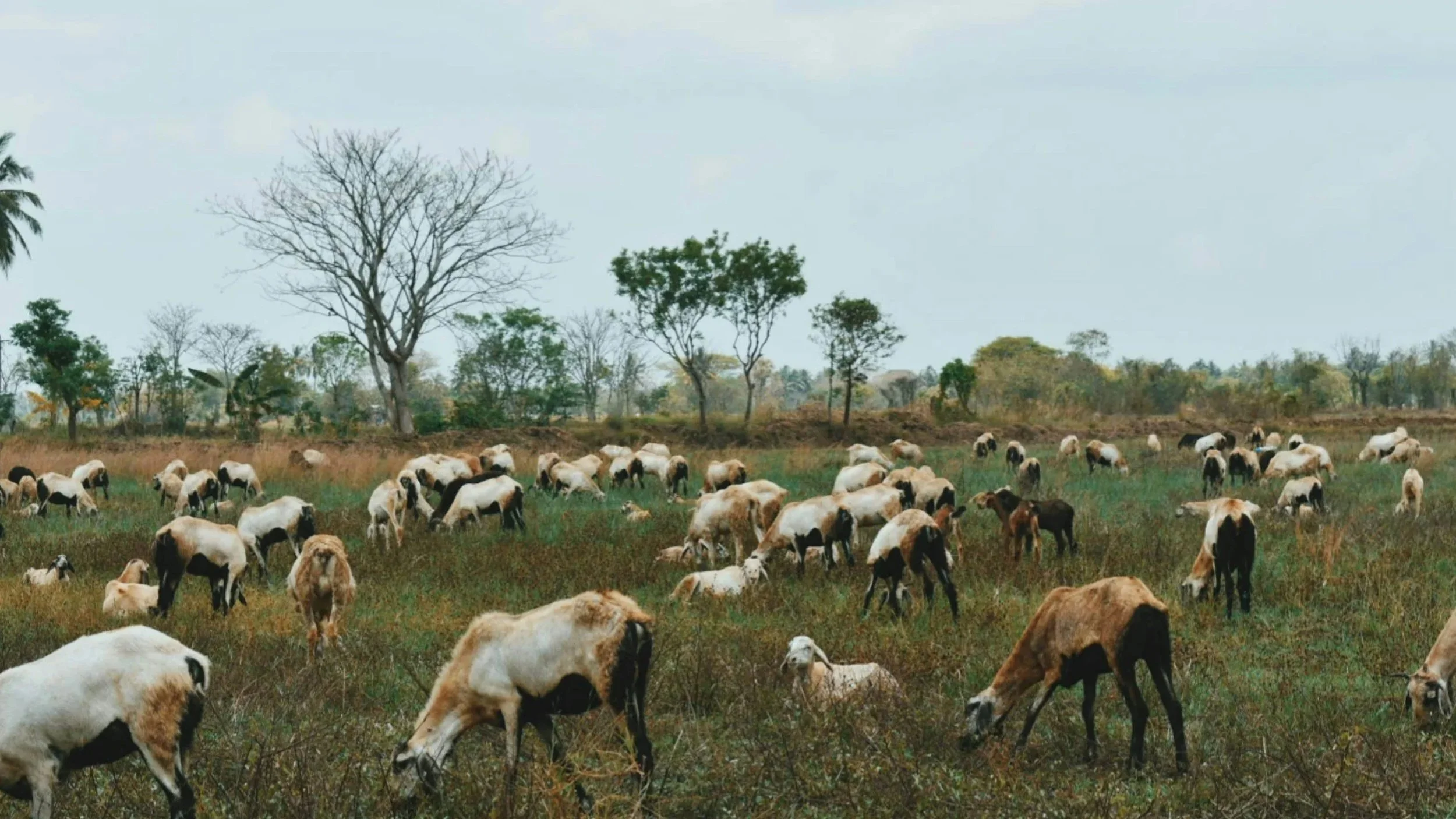
“Give ear, O Shepherd of Israel.” Hear thou the bleatings of thy suffering flock. The name is full of tenderness, and hence is selected by the troubled Psalmist: broken hearts delight in names of grace. Good old Jacob delighted to think of God as the Shepherd of Israel, and this verse may refer to his dying expression: “From thence is the Shepherd, the stone of Israel.” We may be quite sure that he who deigns to be a shepherd to his people will not turn a deaf ear to their complaints.

Psalm 103:6-19
“As a flower of the field, so he flourisheth.” He has a beauty and a comeliness even as the meadows have when they are yellow with the king-cups, but, alas, how shortlived! No sooner come than gone, a flash of loveliness and no more! Man is not even like a flower in the conservatory or in the sheltered garden border, he grows best according to nature, as the field-flower does, and like the unprotected beautifier of the pasture, he runs a thousand risks of coming to a speedy end. A large congregation, in many-coloured attire, always reminds us of a meadow bright with many hues; and the comparison becomes sadly true when we reflect, that as the grass and its goodliness soon pass away, even so will those we gaze upon, and all their visible beauty.

Genesis 41:32-37
In short, because luxury generally prevails in prosperity, and wastes the blessings of God, the bridle of authority was necessary. This is the reason why Joseph directed that garners should be established under the power of the king, and that corn should be gathered into them. He concludes at length, that the dream was useful, although at first sight, it would seem sad and inauspicious: because, immediately after the wound had been shown, the means of cure were suggested.

Ecclesiastes 11:5-6
The seed sown upon the prepared soul promises a rich harvest. “Sow to yourselves” — saith the prophet — “in righteousness; reap in mercy.” (Hos. 10:12) The morning and evening work mark the diligence — “instant in season — out of season.” (2 Tim. 4:2) The active exercise of charity seems to be the lesson primarily inculcated. (Comp. 2 Cor. 9:6-10) For ‘deeds of charity are the seeds of the harvest of eternal life.’ (Diodati.) The uncertainty as to particular results — whether this or that — instead of bringing doubts and difficulties, quickens to diligence.

Psalm 96:11-13
“Let the field be joyful, and all that is therein.” Let the cultivated plains praise the Lord. Peace enables their owners to plough and sew and reap, without fear of the rapine of invaders, and therefore in glad notes they applaud him whose empire is peace. Both men, and creatures that graze the plain, and the crops themselves are represented as swelling the praises of Jehovah, and the figure is both bold and warranted, for the day shall come when every inhabited rood of the ground shall yield its song, and every farmstead shall contain a church.