Psalm 78:42-53
Maschil of Asaph.
78 Give ear, O my people, to my law: incline your ears to the words of my mouth.
2 I will open my mouth in a parable: I will utter dark sayings of old:
3 Which we have heard and known, and our fathers have told us.
4 We will not hide them from their children, shewing to the generation to come the praises of the Lord, and his strength, and his wonderful works that he hath done.
5 For he established a testimony in Jacob, and appointed a law in Israel, which he commanded our fathers, that they should make them known to their children:
6 That the generation to come might know them, even the children which should be born; who should arise and declare them to their children:
7 That they might set their hope in God, and not forget the works of God, but keep his commandments:
8 And might not be as their fathers, a stubborn and rebellious generation; a generation that set not their heart aright, and whose spirit was not stedfast with God.
9 The children of Ephraim, being armed, and carrying bows, turned back in the day of battle.
10 They kept not the covenant of God, and refused to walk in his law;
11 And forgat his works, and his wonders that he had shewed them.
12 Marvellous things did he in the sight of their fathers, in the land of Egypt, in the field of Zoan.
13 He divided the sea, and caused them to pass through; and he made the waters to stand as an heap.
14 In the daytime also he led them with a cloud, and all the night with a light of fire.
15 He clave the rocks in the wilderness, and gave them drink as out of the great depths.
16 He brought streams also out of the rock, and caused waters to run down like rivers.
17 And they sinned yet more against him by provoking the most High in the wilderness.
18 And they tempted God in their heart by asking meat for their lust.
19 Yea, they spake against God; they said, Can God furnish a table in the wilderness?
20 Behold, he smote the rock, that the waters gushed out, and the streams overflowed; can he give bread also? can he provide flesh for his people?
21 Therefore the Lord heard this, and was wroth: so a fire was kindled against Jacob, and anger also came up against Israel;
22 Because they believed not in God, and trusted not in his salvation:
23 Though he had commanded the clouds from above, and opened the doors of heaven,
24 And had rained down manna upon them to eat, and had given them of the corn of heaven.
25 Man did eat angels' food: he sent them meat to the full.
26 He caused an east wind to blow in the heaven: and by his power he brought in the south wind.
27 He rained flesh also upon them as dust, and feathered fowls like as the sand of the sea:
28 And he let it fall in the midst of their camp, round about their habitations.
29 So they did eat, and were well filled: for he gave them their own desire;
30 They were not estranged from their lust. But while their meat was yet in their mouths,
31 The wrath of God came upon them, and slew the fattest of them, and smote down the chosen men of Israel.
32 For all this they sinned still, and believed not for his wondrous works.
33 Therefore their days did he consume in vanity, and their years in trouble.
34 When he slew them, then they sought him: and they returned and enquired early after God.
35 And they remembered that God was their rock, and the high God their redeemer.
36 Nevertheless they did flatter him with their mouth, and they lied unto him with their tongues.
37 For their heart was not right with him, neither were they stedfast in his covenant.
38 But he, being full of compassion, forgave their iniquity, and destroyed them not: yea, many a time turned he his anger away, and did not stir up all his wrath.
39 For he remembered that they were but flesh; a wind that passeth away, and cometh not again.
40 How oft did they provoke him in the wilderness, and grieve him in the desert!
41 Yea, they turned back and tempted God, and limited the Holy One of Israel.
42 They remembered not his hand, nor the day when he delivered them from the enemy.
43 How he had wrought his signs in Egypt, and his wonders in the field of Zoan.
44 And had turned their rivers into blood; and their floods, that they could not drink.
45 He sent divers sorts of flies among them, which devoured them; and frogs, which destroyed them.
46 He gave also their increase unto the caterpiller, and their labour unto the locust.
47 He destroyed their vines with hail, and their sycomore trees with frost.
48 He gave up their cattle also to the hail, and their flocks to hot thunderbolts.
49 He cast upon them the fierceness of his anger, wrath, and indignation, and trouble, by sending evil angels among them.
50 He made a way to his anger; he spared not their soul from death, but gave their life over to the pestilence;
51 And smote all the firstborn in Egypt; the chief of their strength in the tabernacles of Ham:
52 But made his own people to go forth like sheep, and guided them in the wilderness like a flock.
53 And he led them on safely, so that they feared not: but the sea overwhelmed their enemies.
54 And he brought them to the border of his sanctuary, even to this mountain, which his right hand had purchased.
55 He cast out the heathen also before them, and divided them an inheritance by line, and made the tribes of Israel to dwell in their tents.
56 Yet they tempted and provoked the most high God, and kept not his testimonies:
57 But turned back, and dealt unfaithfully like their fathers: they were turned aside like a deceitful bow.
58 For they provoked him to anger with their high places, and moved him to jealousy with their graven images.
59 When God heard this, he was wroth, and greatly abhorred Israel:
60 So that he forsook the tabernacle of Shiloh, the tent which he placed among men;
61 And delivered his strength into captivity, and his glory into the enemy's hand.
62 He gave his people over also unto the sword; and was wroth with his inheritance.
63 The fire consumed their young men; and their maidens were not given to marriage.
64 Their priests fell by the sword; and their widows made no lamentation.
65 Then the Lord awaked as one out of sleep, and like a mighty man that shouteth by reason of wine.
66 And he smote his enemies in the hinder parts: he put them to a perpetual reproach.
67 Moreover he refused the tabernacle of Joseph, and chose not the tribe of Ephraim:
68 But chose the tribe of Judah, the mount Zion which he loved.
69 And he built his sanctuary like high palaces, like the earth which he hath established for ever.
70 He chose David also his servant, and took him from the sheepfolds:
71 From following the ewes great with young he brought him to feed Jacob his people, and Israel his inheritance.
72 So he fed them according to the integrity of his heart; and guided them by the skilfulness of his hands.
This is rightly entitled an instructive Psalm. It is not a mere recapitulation of important events in Israelitish history, but is intended to be viewed as a parable setting forth the conduct and experience of believers in all ages. It is a singular proof of the obtuseness of mind of many professors that they will object to sermons and expositions upon the historical parts of Scripture, as if they contained no instruction in spiritual matters: were such persons truly enlightened by the Spirit of God, they would perceive that all Scripture is profitable, and would blush at their own folly in undervaluing any portion of the inspired volume.
The unity is well maintained throughout, but, for the sake of the reader’s convenience, we may note that verses 1-8 may be viewed as a preface, setting forth the Psalmist’s object in the epic which he is composing. From 9-41 the theme is Israel in the wilderness; then intervenes an account of the Lord’s preceding goodness towards his people in bringing them out of Egypt by plagues and wonders, 42-52. The history of the tribes is resumed at verse 53, and continued to verse 66, where we reach the time of the removal of the ark to Zion, and the transference of the leadership of Israel from Ephraim to Judah, which is rehearsal in song from verses 67-72.
“They remembered not his hand.” Yet it must have been difficult to forget it. Such displays of divine power as those which smote Egypt with astonishment, it must have needed some more than usual effort to blot from the tablets of memory. It is probably meant that they practically, rather than actually, forgot. He who forgets the natural returns of gratitude, may justly be charged with not remembering the obligation. “Nor the day when he delivered them from the enemy.” The day itself was erased from their calendar, so far as any due result from it or return for it. Strange is the faculty of memory in its oblivions as well as its records. Sin perverts man’s powers, makes them forceful only in wrong directions, and practically dead for righteous ends.
“How he had wrought his signs in Egypt.” The plagues were ensigns of Jehovah’s presence and proofs of his hatred of idols; these instructive acts of power were wrought in the open view of all, as signals are set up to be observed by those far and near. “And his wonders in the field of Zoan.” In the whole land were miracles wrought, not in cities alone, but in the broad territory, in the most select and ancient regions of the proud nation. This the Israelites ought not to have forgotten, for they were the favoured people for whom these memorable deeds were wrought.
“And had turned their rivers into blood.” The waters had been made the means of the destruction of Israel’s newborn infants, and now they do as it were betray the crime — they blush for it, they avenge it on the murderers. The Nile was the vitality of Egypt, its true life-blood, but at God’s command it became a flowing curse; every drop of it was a horror, poison to drink, and terror to gaze on. Sometimes he has allowed men, who were his rod, to make rivers crimson with gore, and this is a severe judgment; but the event now before us was more mysterious, more general, more complete, and must, therefore, have been a plague of the first magnitude. “And their floods, that they could not drink.” Lesser streams partook in the curse, reservoirs and canals felt the evil; God does nothing by halves. All Egypt boasted of the sweet waters of their river, but they were made to loathe it more than they had ever loved it. Our mercies may soon become our miseries if the Lord shall deal with us in wrath.
“He sent divers sorts of flies among them, which devoured them.” Small creatures become great tormentors. When they swarm they can sting a man till they threaten to eat him up. In this case, various orders of insects fought under the same banner; lice and beetles, gnats and hornets, wasps and gadflies dashed forward in fierce battalions, and worried the sinners of Egypt without mercy. The tiniest plagues are the greatest. What sword or spear could fight with these innumerable bands? Vain were the monarch’s armour and robes of majesty, the little cannibals were no more lenient towards royal flesh than any other; it had the same blood in it, and the same sin upon it. How great is that God who thus by the minute can crush the magnificent. “And frogs, which destroyed them.” These creatures swarmed everywhere when they were alive, until the people felt ready to die at the sight; and when the reptiles died, the heaps of their bodies made the land to stink so foully, that a pestilence was imminent. Thus not only did earth and air send forth armies of horrible life, but the water also added its legions of loathsomeness. It seemed as if the Nile was first made nauseous and then caused to leave its bed altogether, crawling and leaping in the form of frogs. Those who contend with the Almighty, little know what arrows are in his quiver; surprising sin shall be visited with surprising punishment.
“He gave also their increase unto the caterpiller, and their labour unto the locust.” Different sorts of devourers ate up every green herb and tree. What one would not eat another did. What they expected from the natural fertility of the soil, and what they looked for from their own toil, they saw devoured before their eyes by an insatiable multitude against whose depredations no defence could be found. Observe in the text that the Lord did it all — “he sent,” “he gave,” “he destroyed,” “he gave up,” etc.; whatever the second agent may be, the direct hand of the Lord is in every national visitation.
“He destroyed their vines with hail.” No more shall they butler press the clusters into thy cup, O Pharaoh! The young fruitbearing shoots were broken off, the vintage failed. “And their sycomore trees with frost.” Frost was not usual, but Jehovah regards no laws of nature when men regard not his moral laws. The sycomore fig was perhaps more the fruit of the many than was the vine, therefore this judgment was meant to smite the poor, while the former fell most heavily upon the rich. Mark how the heavens obey their Lord and yield their stores of hail, and note how the fickle weather is equally subservient to the divine will.
“He gave up their cattle also to the hail.” What hail it must have been to have force enough to batter down bullocks and other great beasts. God usually protects animals from such destruction, but here he withdrew his safeguards and gave them up: may the Lord never give us up. Some read, “shut up,” and the idea of being abandoned to destructive influences is then before us in another shape. “And their flocks to hot thunderbolts.” Fire was mingled with the hail, the fire ran along upon the ground, it smote the smaller cattle. What a storm must that have been: its effects were terrible enough upon plants, but to see the poor dumb creatures stricken must have been heart breaking. Adamantine was the heart which quailed not under such plagues as these, harder than adamant those hearts which in after years forgot all that the Lord had done, and broke off from their allegiance to him.
“He cast upon them the fierceness of his anger, wrath, and indignation, and trouble.” His last arrow was the sharpest. He reserved the strong wine of his indignation to the last. Note how the Psalmist piles up the words, and well he might; for blow followed blow, each one more staggering than its predecessor, and then the crushing stroke was reserved for the end. “By sending evil angels among them.” Messengers of evil entered their houses at midnight, and smote the dearest objects of their love. The angels were evil to them, though good enough in themselves; those who to the heirs of salvation are ministers of grace, are to the heirs of wrath executioners of judgment. When God sends angels, they are sure to come, and if he bids them slay they will not spare. See how sin sets all the powers of heaven in array against man; he has no friend left in the universe when God is his enemy.
“He made a way to his anger,” coming to the point with them by slow degrees; assailing their outworks first by destroying their property, and then coming in upon their persons as through an open breach in the walls. He broke down all the comforts of their life, and then advanced against their life itself. Nothing could stand in his way; he cleared a space in which to do execution upon his adversaries. “He spared not their soul from death, but gave their life over to the pestilence.” In their soul was the origin of the sin, and he followed it to its source and smote it there. A fierce disease filled the land with countless funerals; Jehovah dealt out myriads of blows, and multitudes of spirits failed before him.
“And smote all the firstborn in Egypt.” No exception were made, the monarch bewailed his heir as did the menial at the mill. They smote the Lord’s firstborn, even Israel, and he smites theirs. “The chief of their strength in the tabernacles of Ham.” Swinging his scythe over the field, death topped off the highest flowers. The tents of Ham knew each one its own peculiar sorrow, and were made to sympathise with the sorrows which had been ruthlessly inflicted upon the habitations of Israel. Thus curses come home to roost. Oppressors are repaid in their own coin, without the discount of a penny.
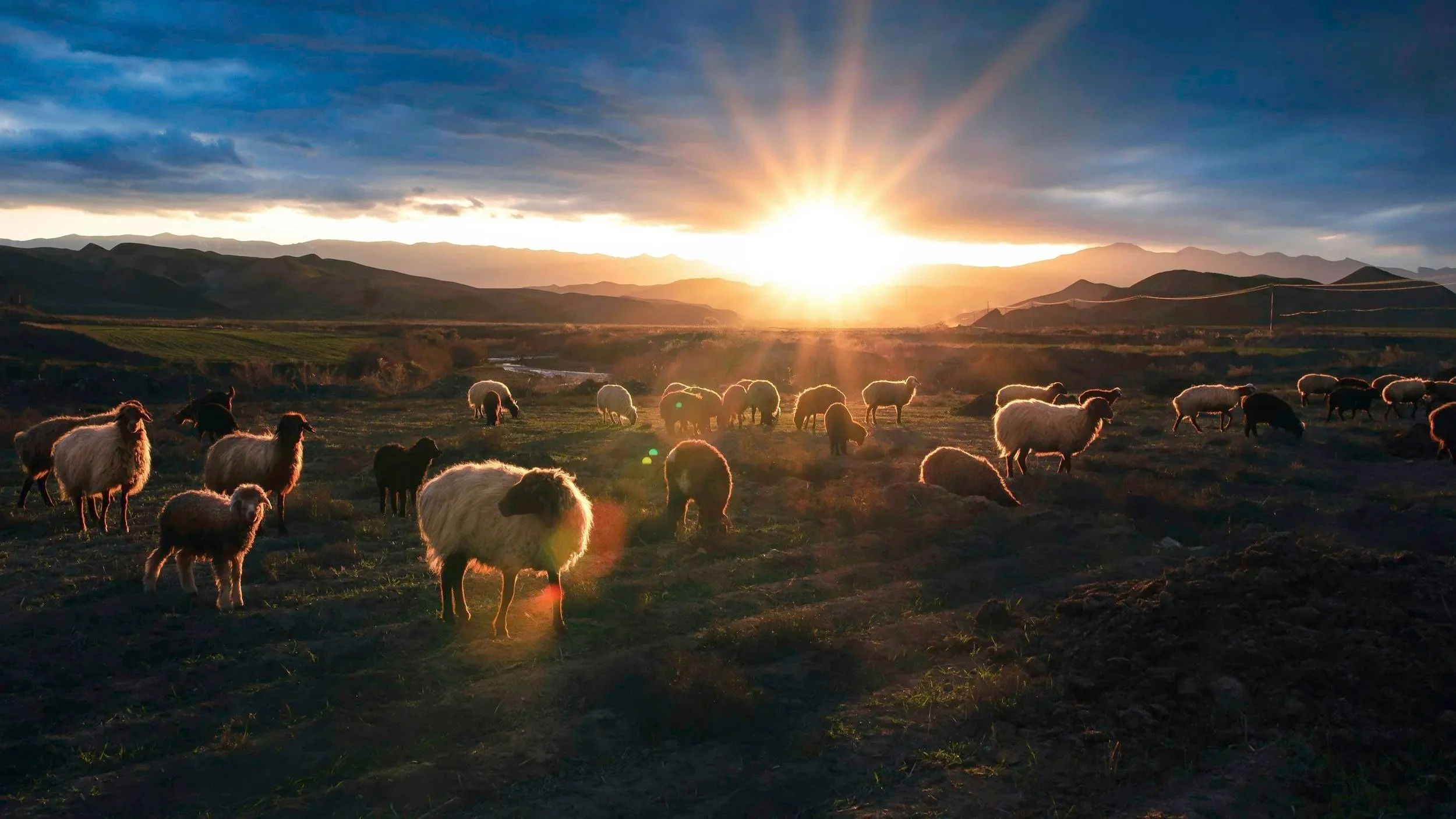
“But made his own people to go forth like sheep.” The contrast is striking, and ought never to have been forgotten by the people. The wolves were slain in heaps, the sheep were carefully gathered, and triumphantly delivered. The tables were turned, and the poor serfs became the honoured people, while their oppressors were humbled before them. Israel went out in a compact body like a flock; they were defenceless in themselves as sheep, but they were safe under their Great Shepherd; they left Egypt as easily as a flock leaves one pasture for another. “And guided them in the wilderness like a flock.” Knowing nothing of the way by their own understanding or experience, they were, nevertheless, rightly directed, for the All-wise God knew every spot of the wilderness. To the sea, through the sea, and from the sea, the Lord led his chosen; while their former taskmasters were too cowed in spirit, and broken in power, to dare to molest them.
“And he led them on safely, so that they feared not.” After the first little alarm, natural enough when they found themselves pursued by their old taskmasters, they plucked up courage and ventured boldly into the sea, and afterwards into the desert where no man dwelt. “But the sea overwhelmed their enemies.” They were gone, gone for ever, never to disturb the fugitives again. That tremendous blow effectually defended the tribes for forty years from any further attempt to drive them back. Egypt found the stone too heavy and was glad to let it alone. Let the Lord be praised who thus effectually freed his elect nation.
What a grand narrative have we been considering. Well might the mightiest master of sacred song select “Israel in Egypt” as a choice theme for his genius; and well may every believing mind linger over every item of the amazing transaction. The marvel is that the favoured nation should live as if unmindful of it all, and yet such is human nature. Alas, poor man! Rather, alas, base heart!
We now, after a pause, follow again the chain of events, the narration of which had been interrupted by a retrospect, and we find Israel entering into the promised land, there to repeat her follies and enlarge her crimes.
— Charles H. Spurgeon (1834-1892)
