
Psalm 80:1-3
“Give ear, O Shepherd of Israel.” Hear thou the bleatings of thy suffering flock. The name is full of tenderness, and hence is selected by the troubled Psalmist: broken hearts delight in names of grace. Good old Jacob delighted to think of God as the Shepherd of Israel, and this verse may refer to his dying expression: “From thence is the Shepherd, the stone of Israel.” We may be quite sure that he who deigns to be a shepherd to his people will not turn a deaf ear to their complaints.

Psalm 103:6-19
“As a flower of the field, so he flourisheth.” He has a beauty and a comeliness even as the meadows have when they are yellow with the king-cups, but, alas, how shortlived! No sooner come than gone, a flash of loveliness and no more! Man is not even like a flower in the conservatory or in the sheltered garden border, he grows best according to nature, as the field-flower does, and like the unprotected beautifier of the pasture, he runs a thousand risks of coming to a speedy end. A large congregation, in many-coloured attire, always reminds us of a meadow bright with many hues; and the comparison becomes sadly true when we reflect, that as the grass and its goodliness soon pass away, even so will those we gaze upon, and all their visible beauty.

Genesis 41:32-37
In short, because luxury generally prevails in prosperity, and wastes the blessings of God, the bridle of authority was necessary. This is the reason why Joseph directed that garners should be established under the power of the king, and that corn should be gathered into them. He concludes at length, that the dream was useful, although at first sight, it would seem sad and inauspicious: because, immediately after the wound had been shown, the means of cure were suggested.

Ecclesiastes 11:5-6
The seed sown upon the prepared soul promises a rich harvest. “Sow to yourselves” — saith the prophet — “in righteousness; reap in mercy.” (Hos. 10:12) The morning and evening work mark the diligence — “instant in season — out of season.” (2 Tim. 4:2) The active exercise of charity seems to be the lesson primarily inculcated. (Comp. 2 Cor. 9:6-10) For ‘deeds of charity are the seeds of the harvest of eternal life.’ (Diodati.) The uncertainty as to particular results — whether this or that — instead of bringing doubts and difficulties, quickens to diligence.

Psalm 96:11-13
“Let the field be joyful, and all that is therein.” Let the cultivated plains praise the Lord. Peace enables their owners to plough and sew and reap, without fear of the rapine of invaders, and therefore in glad notes they applaud him whose empire is peace. Both men, and creatures that graze the plain, and the crops themselves are represented as swelling the praises of Jehovah, and the figure is both bold and warranted, for the day shall come when every inhabited rood of the ground shall yield its song, and every farmstead shall contain a church.

Psalm 100:1-5
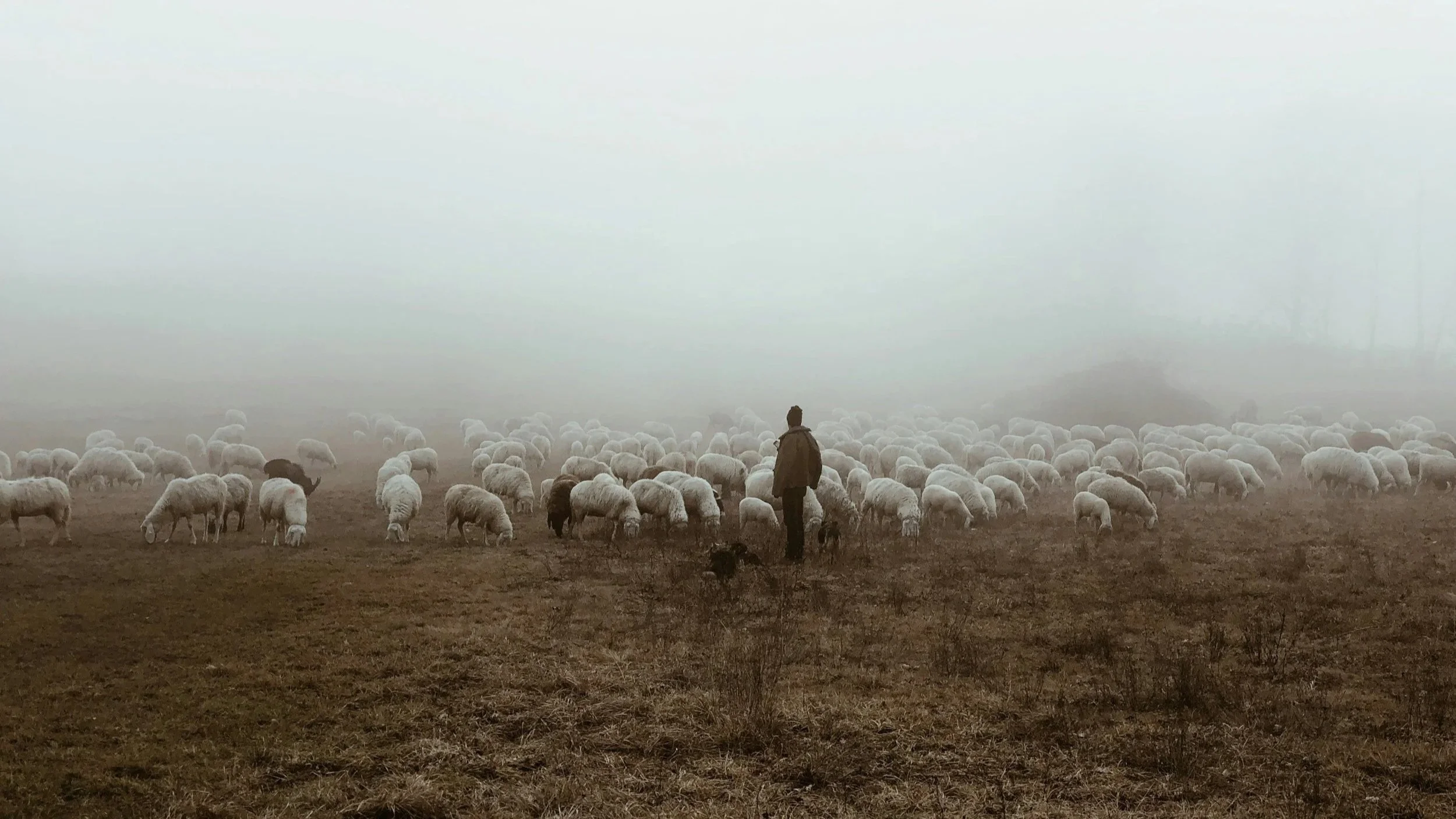
“We are his people, and the sheep of his pasture.” It is our honour to have been chosen from all the world besides to be his own people, and our privilege to be therefore guided by his wisdom, tended by his care, and fed by his bounty. Sheep gather around their shepherd and look up to him; in the same manner let us gather around the great Shepherd of mankind. The avowal of our relation to God is in itself praise; when we recount his goodness we are rendering to him the best adoration; our songs require none of the inventions of fictions, the bare facts are enough; the simple narration of the mercies of the Lord is more astonishing than the productions of imagination.

Luke 21:25-33
The general duty which these words should teach us is very plain. We are to observe carefully the public events of the times in which we live. We are not to be absorbed in politics, but we are to mark political events. We are not to turn prophets ourselves, but we are to study diligently the signs of our times. So doing, the day of Christ will not come upon us entirely unawares.

Luke 22:31-38
WE learn, from these verses, what a fearful enemy the devil is to believers. We read that “the Lord said, Simon, Simon, Satan hath desired to have you, that he may sift you as wheat.” He was near Christ’s flock, though they saw him not. He was longing to compass their ruin, though they knew it not. The wolf does not crave the blood of the lamb more than the devil desires the destruction of souls.

2 Corinthians 6:14-15
It is a very great absurdity, 2 Cor. 6:14-15. It is an unequal yoking of things together that will not agree together; as bad as for the Jews to have ploughed with an ox and an ass or to have sown divers sorts of grain intermixed. What an absurdity it is to think of joining righteousness and unrighteousness, or mingling light and darkness, Fire and Water, together! Believers are, and should be, righteous; but unbelievers are unrighteousness. Believers are made light in the Lord, but unbelievers are in darkness; and what comfortable communion can these have together? Christ and Belial are contrary to one another; they have opposite interests and designs, so that it is impossible there should be any concord or agreement between them.
Ecclesiastes 12:11
Solomon illustrates the power of the words of the wise by goads — so needful to urge on the sluggish oxen in their forward pace — turning neither to the right hand nor to the left. And who of us does not need the goad? Slumbering as we are in cold formality — hearing the word, as if we heard it not — what a mercy is it to feel the piercing point of the goad, experimentally to know the “Scripture as profitable for reproof” (2 Tim. 3:16) — awakening — alarming — stirring up the cry of anxious distress, “What shall we do?” (Acts 2:37) Is it not fearful to be under the power of the word, and yet to continue so insensible? as if the goad just touched the skin, and did not penetrate the heart?

Psalm 78:67-72
“He chose David also his servant.” It was an election of a sovereignly gracious kind, and it operated practically by making the chosen man a willing servant of the Lord. He was not chosen because he was a servant, but in order that he might be so. David always esteemed it to be a high honour that he was both elect of God, and a servant of God. “And took him from the sheepfolds.” A shepherd of sheep he had been, and this was a fit school for a shepherd of men. Lowliness of occupation will debar no man from such honours as the Lord’s election confers, the Lord seeth not as man seeth. He delights to bless those who are of low estate.

Genesis 41:1-7
That another dream succeeded to the former, arose from two causes; for God both designed to rouse the mind of Pharaoh to more diligent inquiry, and to add more light to a vision which was obscure. In short, he follows the same course in this dream which he does in his daily method of procedure; for he repeats a second time what he has before delivered, and sometimes inculcates still more frequently, not only that the doctrine may penetrate more deeply into men’s hearts, and thus affect them the more; but also that he may render it more familiar to their minds.

Ecclesiastes 3:18-21
We must not pass by this clear proof of the immortality of the soul. The spirit even of the wicked goeth upward. It appears in the presence of the Great “Judge of all” — who, though “filling heaven and earth with his presence, hath prepared his throne in the heavens.” (Jer. 23:24; Ps. 103:19) Here is our lively hope — not like the feeble twinkling rays in the dark heathen cloud. Not “life” only, but “immortality is brought to light by the Gospel.” (2 Tim. 1:10) But who knoweth? How few realize the confidence! All beyond the grave rests on Divine Revelation. Yet unspeakable is the mercy, when in this clear light we can see our “spirits” — not going downward to perish, but “made perfect” (Heb. 12:23) in the presence of God for ever.

Psalm 95:6-11
“And we are the people of his pasture, and the sheep of his hand.” As he belongs to us, so do we belong to him. “My Beloved is mine, and I am his.” And we are his as the people whom he daily feeds and protects. Our pastures are not ours, but his; we draw all our supplies from his stores. We are his, even as sheep belong to the shepherd, and his hand is our rule, our guidance, our government, our succour, our source of supply.

Luke 15:1-10
Christ’s love is an active, working love. Just as the shepherd did not sit still bewailing his lost sheep, and the woman did not sit still bewailing her lost money, so our blessed Lord did not sit still in heaven pitying sinners. He left the glory which He had with the Father, and humbled Himself to be made in the likeness of man. He came down into the world to seek and save that which was lost. He never rested till He had made atonement for our transgressions, brought in everlasting righteousness, provided eternal redemption, and opened a door of life to all who are willing to be saved.

Psalm 102:1-11
“My heart is smitten,” like a plant parched by the fierce heat of a tropical sun, “and withered like grass,” which dries up when once the scythe has laid it low. The Psalmist’s heart was as a wilted, withered flower, a burned up mass of what once was verdure. His energy, beauty, freshness, and joy, were utterly gone, through the wasting influence of his anguish. “So that I forget to eat my bread,” or “because I forget to eat my bread.” Grief often destroys the appetite, and the neglect of food tends further to injure the constitution and create a yet deeper sinking of spirit. As the smitten flower no longer drinks in the dew, or draws up nutriment from the soil, so a heart parched with intense grief often refuses consolation for itself and nourishment for the bodily frame, and descends at a doubly rapid rate into weakness, despondency, and dismay.

Genesis 41:14-31
And this passage is the more worthy of observation; because, in all ages, many foolish persons have endeavoured to rob God of half his glory, and now (as I have said) the same figment pleases many philosophers; because they think it absurd to ascribe to God whatever is done in the world: as if truly the Scripture had in vain declared, that his “judgments are a great deep.” (Ps. 36:7) But while they would subject the works of God to the judgment of their own brain, having rejected his word, they prefer giving credit to Plato respecting celestial mysteries. “That God,” they say, “has foreknowledge of all things, does not involve the necessity of their occurrence:” as if, indeed, we asserted, that bare prescience was the cause of things, instead of maintaining the connection established by Moses, that God foreknows things that are future, because he had determined to do them; but they ignorantly and perversely separate the providence of God from his eternal counsel, and his continual operation. Above all things, it is right to be fully persuaded that, whenever the earth is barren, whether frost, or drought, or hail, or any other thing, may be the cause of it, the whole result is directed by the counsel of God.

Psalm 80:8-19
“And the vineyard which thy right hand hath planted.” Shall all thy care be lost? Thou hast done so much, wilt thou lose thy labour? With thy power and wisdom thou didst great things for thy people, wilt thou now utterly give them up, and suffer thine enemies to exult in the evil which they delight in?

Luke 17:26-37
The meaning of these expressions is clear and plain. The day of Christ’s second advent shall be the day when good and evil, converted and unconverted, shall at length be divided into two distinct bodies. The visible Church shall no longer be a mixed body. The wheat and the tares shall no longer grow side by side. The good fish and the bad shall at length be sorted into two bodies. The angels shall come forth, and gather together the godly, that they may be rewarded; and leave the wicked behind to be punished. “Converted or unconverted,” will be the only subject of enquiry. It will matter nothing that people have worked together, and slept together, and lived together for many years. They will be dealt with at last according to their religion.

Philippians 4:11-18
It did not come from discontent, or distrust of Providence: Not that I speak in respect of want (Phil. 4:11); not in respect of any want he felt, nor of any want he feared. As to the former, he was content with the little he had, and that satisfied him; as to the latter, he depended upon the providence of God to provide for him from the day to day, and that satisfied him: so that he did not speak in respect of want any way. For I have learned, in whatsoever state I am, therewith to be content. We have here an account of Paul’s learning, not that which he got at the feet of Gamaliel, but that which he got at the feet of Christ.