
Luke 22:14-23
The two elements of bread and wine were intended to preach Christ crucified as our substitute under lively emblems. They were to be a visible sermon, appealing to the believer’s senses, and teaching the old foundation-truth of the Gospel, that Christ’s death on the cross is the life of man’s soul.

Ecclesiastes 5:8-9
Agriculture was an ordinance of God before the fall. (See Gen. 2:15) ‘And of all the arts of civilized man, it is transcendently the most essential and valuable. Other arts may contribute to the comfort, the convenience, and the embellishment of life. But the cultivation of the soil stands in immediate connexion with our very existence. The life itself, to whose comfort, convenience, and embellishment other arts contribute, is by this to be sustained, so that others without it can avail nothing. In their dependence on the field all are equal. The prince and the peasant are alike served of it.’ (Wardlaw.)

Genesis 41:46-49
And Moses, in a few words, praises his incredible prudence, in having quickly found out the best method of preserving the corn. For it was an arduous task to erect storehouses in every city, which should contain the entire produce of one year, and a fifth part more. This arrangement was also not less a proof of sagacity, in providing that the inhabitants of any given region should not have to seek food at a distance. Immediately afterwards his integrity is mentioned, which was equally deserving of praise; because in the immense accumulation which was made, he abstained from all self-indulgence, just as if some humble office only, had been assigned to him.

James 1:10-11
Both these are allowed to rejoice. No condition of life puts us out of a capacity of rejoicing in God. If we do not rejoice in him always, it is our own fault. Those of low degree may rejoice, if they are exalted to be rich in faith and heirs of the kingdom of God (as Dr. Whitney explains this place); and the rich may rejoice in humbling providences, as they produce a lowly and humble disposition of mind, which is highly valuable in the sight of God. Where any are made poor for righteousness’ sake, their very poverty is their exaltation. It is an honour to be dishonored for the sake of Christ.
Luke 14:15-24
We are taught, thirdly, in this parable, that many who receive Gospel invitations refuse to accept them. We read that when the servant announced that all things were ready, those who were invited “all with one consent began to make excuse.” One had one trivial excuse, and another had another. In one point only all were agreed. They would not come.

Psalm 81:8-16
“He should have fed them also with the finest of the wheat.” Famine would have been an unknown word, they would have been fed on the best of the best food, and have had abundance of it as their every day diet. “And with honey out of the rock should I have satisfied thee.” Luxuries as well as necessaries would be forthcoming, the very rocks of the land would yield abundant and sweet supplies; the bees would store the clefts of the rocks with luscious honey, and so turn the most sterile part of the land to good account. The Lord can do great things for an obedient people. When his people walk in the light of his countenance, and maintain unsullied holiness, the joy and consolation which he yields them are beyond conception.

Luke 14:1-6
Let us mark, lastly, in this passage, how our Lord asserts the lawfulness of doing works of mercy on the Sabbath day. We read that he healed a man who had the dropsy on the Sabbath day, and then said to the lawyers and Pharisees, “Which of you shall have an ass or an ox fallen into a pit, and will not straightway pull him out on the Sabbath day?” This was a home-thrust, which could not be parried. It is written, “They could not answer Him again.”

1 Peter 2:25
Here is the recovery of these by conversion: But are now returned. The word is passive, and shows that the return of a sinner is the effect of divine grace. This return is from all their errors and wandering, to Christ, who is the true and careful shepherd, that loves his sheep, and laid down his life for them, who is the most vigilant pastor, and bishop, or overseer of souls.

Psalm 79:13
“So we thy people and sheep of thy pasture will give thee thanks for ever; we will shew forth thy praise to all generations.” The gratitude of the church is lasting as well as deep. On her tablets are memorials of great deliverances, and, as long as she shall exist, her sons will rehearse them with delight. We have a history which will survive all other records, and it is bright in every line with the glory of the Lord. From the direst calamities God’s glory springs, and the dark days of his people become the prelude to unusual displays of the Lord’s love and power.

Luke 20:9-19
We should learn to be more thankful for God’s mercy. We have probably little idea of the extent of our obligations to it, and of the number of gracious messages which the Lord of the vineyard is constantly sending to our souls. The last day will unfold to our wondering eyes a long list of unacknowledged kindnesses, of which while we lived we took no notice. Mercy we shall find was indeed God’s darling attribute. “He delighteth in mercy.” (Micah 7:18)

Luke 5:1-11
That promise, we may well believe, was not intended for Peter only but for all the Apostles, — and not for all the Apostles only, but for all faithful ministers of the Gospel who walk in the Apostles’ steps. It was spoken for their encouragement and consolation. It was intended to support them under that sense of weakness and unprofitableness by which they are sometimes almost overwhelmed. They certainly have a treasure in earthen vessels. (2 Cor. 4:7) They are men of like passions with others. They find their own hearts weak and frail, like the hearts of any of their hearers. They are often tempted to give up in despair, and to leave off preaching. But here stands a promise, on which the great Head of the Church would have them daily lean: “Fear not, thou shalt catch men.”

Luke 2:1-7
We see here the grace and condescension of Christ. Had He come to save mankind with royal majesty, surrounded by His Father’s angels, it would have been an act of undeserved mercy. Had He chosen to dwell in a palace, with power and great authority, we should have had reason enough to wonder. But to become poor as the very poorest of mankind, and lowly as the very lowliest, — this is a love that passeth knowledge. It is unspeakable and unsearchable. Never let us forget that through this humiliation Jesus has purchased for us a title to glory. Through His life of suffering, as well as His death, He has obtained eternal redemption for us. All through His life He was poor for our sakes, from the hour of His birth to the hour of His death. And through His poverty we are made rich. (2 Cor. 8:9)

Mark 2:23-28
We see from these verse, what extravagant importance is attached to trifles by those who are mere formalists in religion. The Pharisees were mere formalists, if there ever were any in the world. They seem to have thought exclusively of the outward part, the husk, the shell, and the ceremonial of religion. They even added to these externals by traditions of their own. Their godliness was made up of washings, and fastings, and peculiarities in dress, and will-worship, while repentance, and faith, and holiness were comparatively overlooked.

Luke 8:4-15
Our Lord tells us that the hearts of many hearers of the word are like thorny ground. The seed of the word, when sown upon them, is choked by the multitude of other things, by which their affections are occupied. They have no objection to the doctrines and requirements of the Gospel. They even wish to believe and obey them. But they allow the things of earth to get such hold upon their minds, that they leave no room for the word of God to do its work. And hence it follows that however many sermons they hear, they seem nothing bettered by them. A weekly process of truth-stifling goes on within. They bring no fruit to perfection.

Luke 12:32-40
Believers are a “little flock.” They always have been, ever since the world began. Professing servants of God have sometimes been very many. Baptized people at the present day are a great company. But true Christians are very few. It is foolish to be surprised at this. It is vain to expect it will be otherwise until the Lord comes again. “Straight is the gate, and narrow is the way, that leadeth unto life, and few there be that find it.” (Matt. 7:14)

Luke 8:5-18
It is not enough that the fruit be brought forth, but it must be brought to perfection, it must be fully ripened. If it be not, it is as if there was no fruit at all brought forth; for that which in Matthew and Mark is said to be unfruitful is the same that here is said to bring forth none to perfection. For factum non dicitur quod non perseverat—perseverance is necessary to the perfection of a work.

1 Corinthians 9:7-14
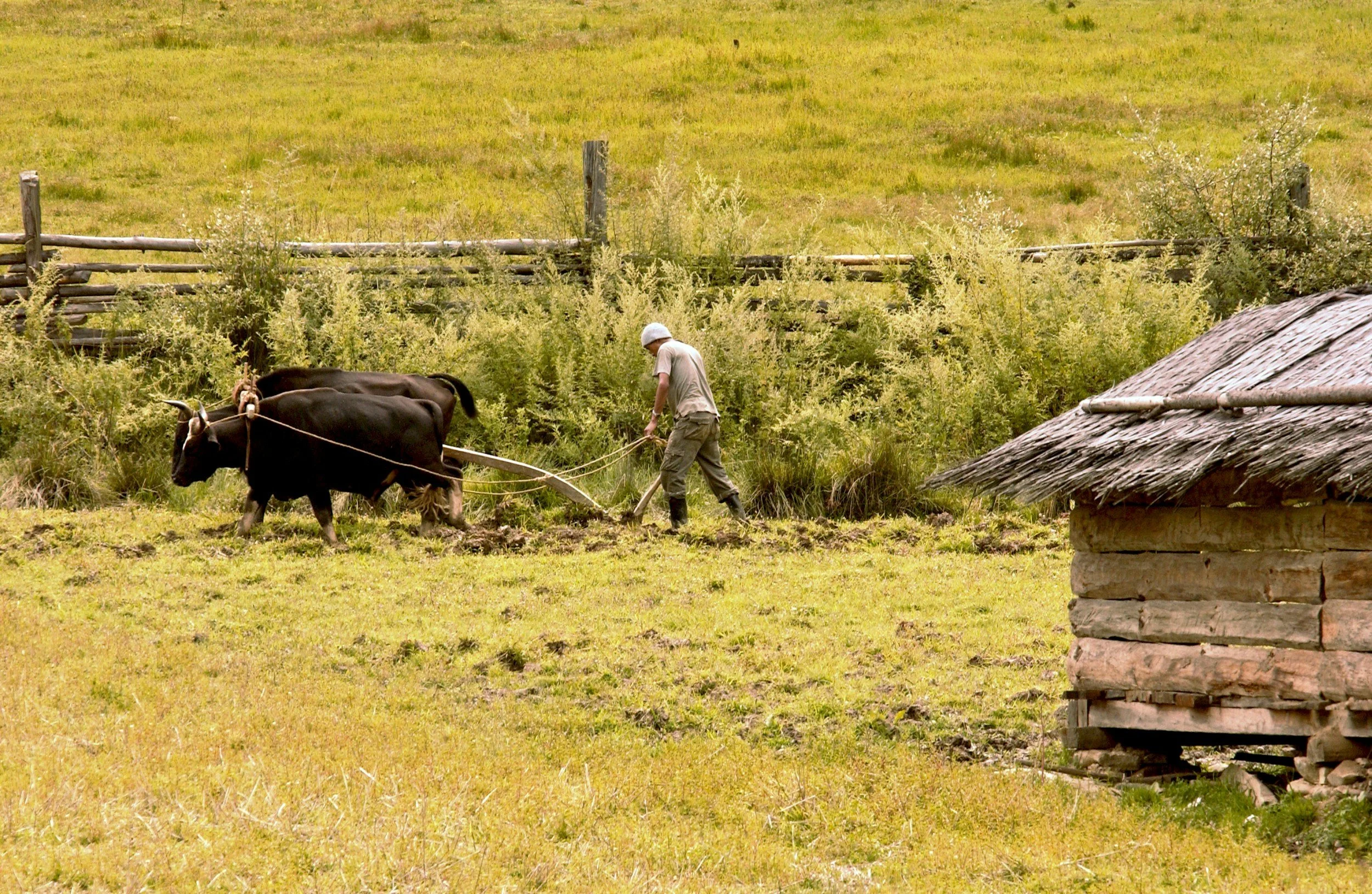
He argues it out of the Jewish law: Say I these things as a man? Or saith not the law the same also? 1 Cor. 9:8. Is this merely a dictate of common reason and according to common usage only? No, it is consonant to the old law. God had therein ordered that the ox should not be muzzled while he was treading out the corn, nor hindered from eating while he was preparing the corn for man’s use, and treading it out of the ear. But this law was not chiefly given out of God’s regard to oxen, or concern for them, but to teach mankind that all due encouragement should be given to those who are employed for us, or labouring for our good—that the labourers should taste of the fruit of their labours. Those who plough should plough in hope; and those who thresh in hope should be partakers of their hope, 1 Cor. 9:10. The law saith this about oxen for our sakes. Note, those that lay themselves out to do our souls good should not have their mouths muzzled, but have food provided for them.

Psalm 23:1
”The Lord is my shepherd.” What condescension is this, that the Infinite Lord assumes towards his people the office and character of a Shepherd! It should be the subject of grateful admiration that the great God allows himself to be compared to anything which will set forth his great love and care for his own people. David had himself been a keeper of sheep, and understood both the needs of the sheep and the many cares of a shepherd. He compares himself to a creature weak, defenceless, and foolish, and he takes God to be his Provider, Preserver, Director, and, indeed, his everything.
Mark 13:24-31
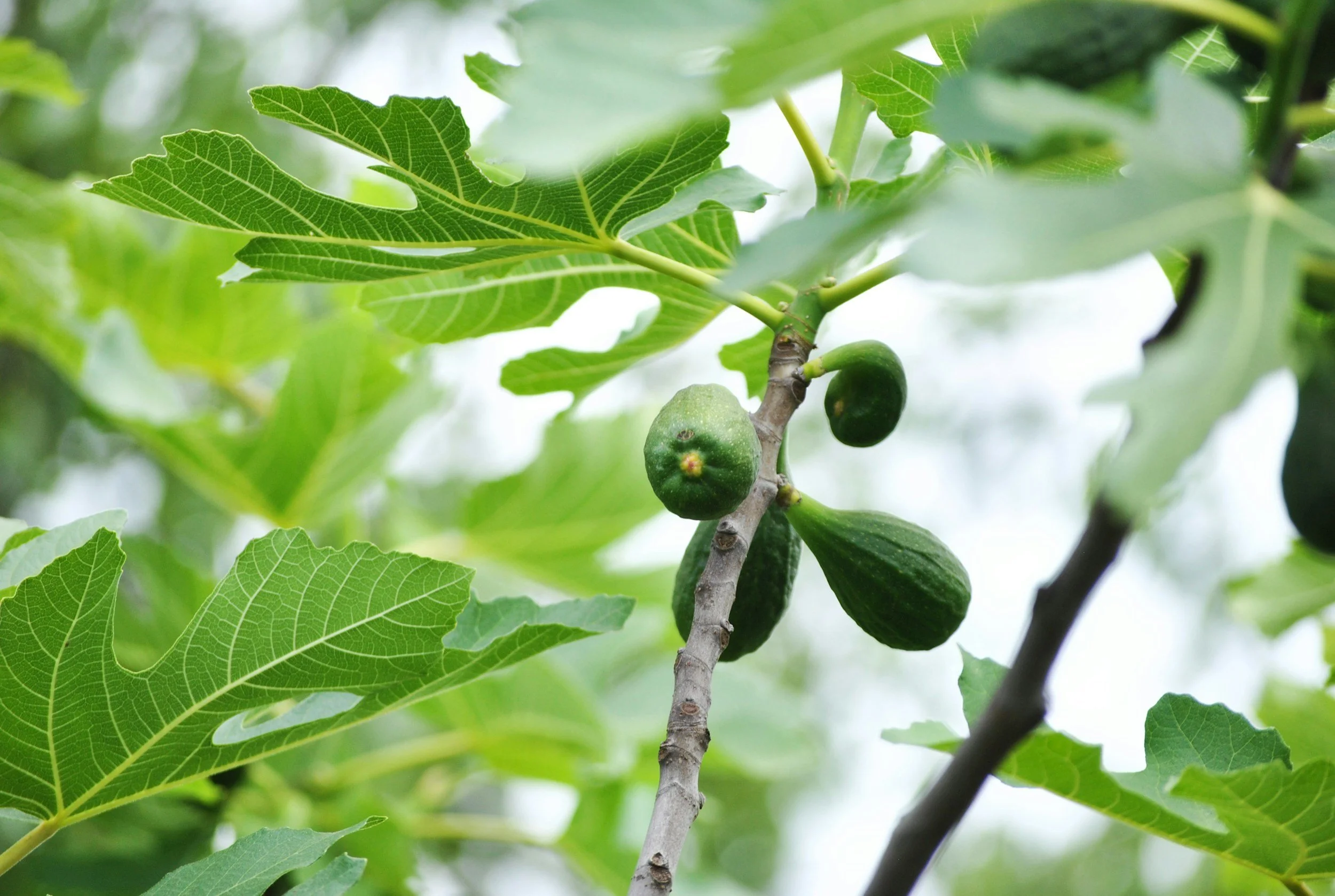
Let us observe, in the next place, how important it is to note the signs of our own times. Our Lord bids His disciples “learn a parable of the fig tree.” Just as its budding leaves tell men that summer is near, so the fulfilment of events in the world around us, should teach us that the Lord’s coming “is nigh, even at the doors.” It becomes all true Christians to observe carefully the public events of their own day. It is not only a duty to do this, but a sin to neglect it. Our Lord reproved the Jews for “not discerning the signs of the times.” (Matt. 16:3) They did not see that the sceptre was passing away from Judah, and the weeks of Daniel running out. Let us rather open our eyes, and look at the world around us.

Genesis 9:20
“And Noah began to be an husbandman.” I do not so explain the words, as if he then, for the first time, began to give his attention to the cultivation of the fields; but, (in my opinion,) Moses rather intimates, that Noah, with a collected mind, though now an old man, returned to the culture of the fields, and to his former labours. It is, however, uncertain whether he had been a vine-dresser or not.