Psalm 78:67-72
Maschil of Asaph.
78 Give ear, O my people, to my law: incline your ears to the words of my mouth.
2 I will open my mouth in a parable: I will utter dark sayings of old:
3 Which we have heard and known, and our fathers have told us.
4 We will not hide them from their children, shewing to the generation to come the praises of the Lord, and his strength, and his wonderful works that he hath done.
5 For he established a testimony in Jacob, and appointed a law in Israel, which he commanded our fathers, that they should make them known to their children:
6 That the generation to come might know them, even the children which should be born; who should arise and declare them to their children:
7 That they might set their hope in God, and not forget the works of God, but keep his commandments:
8 And might not be as their fathers, a stubborn and rebellious generation; a generation that set not their heart aright, and whose spirit was not stedfast with God.
9 The children of Ephraim, being armed, and carrying bows, turned back in the day of battle.
10 They kept not the covenant of God, and refused to walk in his law;
11 And forgat his works, and his wonders that he had shewed them.
12 Marvellous things did he in the sight of their fathers, in the land of Egypt, in the field of Zoan.
13 He divided the sea, and caused them to pass through; and he made the waters to stand as an heap.
14 In the daytime also he led them with a cloud, and all the night with a light of fire.
15 He clave the rocks in the wilderness, and gave them drink as out of the great depths.
16 He brought streams also out of the rock, and caused waters to run down like rivers.
17 And they sinned yet more against him by provoking the most High in the wilderness.
18 And they tempted God in their heart by asking meat for their lust.
19 Yea, they spake against God; they said, Can God furnish a table in the wilderness?
20 Behold, he smote the rock, that the waters gushed out, and the streams overflowed; can he give bread also? can he provide flesh for his people?
21 Therefore the Lord heard this, and was wroth: so a fire was kindled against Jacob, and anger also came up against Israel;
22 Because they believed not in God, and trusted not in his salvation:
23 Though he had commanded the clouds from above, and opened the doors of heaven,
24 And had rained down manna upon them to eat, and had given them of the corn of heaven.
25 Man did eat angels' food: he sent them meat to the full.
26 He caused an east wind to blow in the heaven: and by his power he brought in the south wind.
27 He rained flesh also upon them as dust, and feathered fowls like as the sand of the sea:
28 And he let it fall in the midst of their camp, round about their habitations.
29 So they did eat, and were well filled: for he gave them their own desire;
30 They were not estranged from their lust. But while their meat was yet in their mouths,
31 The wrath of God came upon them, and slew the fattest of them, and smote down the chosen men of Israel.
32 For all this they sinned still, and believed not for his wondrous works.
33 Therefore their days did he consume in vanity, and their years in trouble.
34 When he slew them, then they sought him: and they returned and enquired early after God.
35 And they remembered that God was their rock, and the high God their redeemer.
36 Nevertheless they did flatter him with their mouth, and they lied unto him with their tongues.
37 For their heart was not right with him, neither were they stedfast in his covenant.
38 But he, being full of compassion, forgave their iniquity, and destroyed them not: yea, many a time turned he his anger away, and did not stir up all his wrath.
39 For he remembered that they were but flesh; a wind that passeth away, and cometh not again.
40 How oft did they provoke him in the wilderness, and grieve him in the desert!
41 Yea, they turned back and tempted God, and limited the Holy One of Israel.
42 They remembered not his hand, nor the day when he delivered them from the enemy.
43 How he had wrought his signs in Egypt, and his wonders in the field of Zoan.
44 And had turned their rivers into blood; and their floods, that they could not drink.
45 He sent divers sorts of flies among them, which devoured them; and frogs, which destroyed them.
46 He gave also their increase unto the caterpiller, and their labour unto the locust.
47 He destroyed their vines with hail, and their sycomore trees with frost.
48 He gave up their cattle also to the hail, and their flocks to hot thunderbolts.
49 He cast upon them the fierceness of his anger, wrath, and indignation, and trouble, by sending evil angels among them.
50 He made a way to his anger; he spared not their soul from death, but gave their life over to the pestilence;
51 And smote all the firstborn in Egypt; the chief of their strength in the tabernacles of Ham:
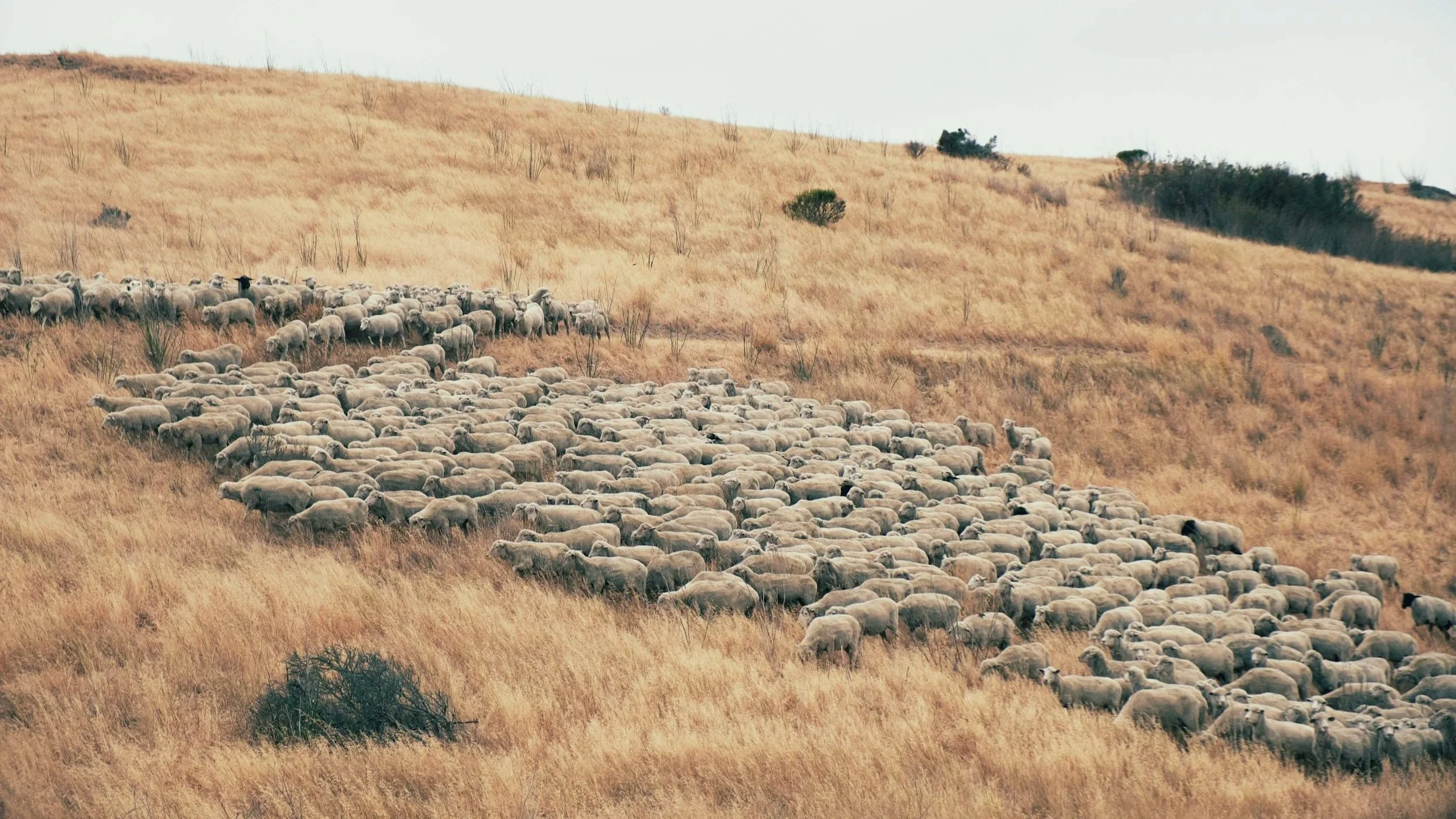
52 But made his own people to go forth like sheep, and guided them in the wilderness like a flock.
53 And he led them on safely, so that they feared not: but the sea overwhelmed their enemies.
54 And he brought them to the border of his sanctuary, even to this mountain, which his right hand had purchased.
55 He cast out the heathen also before them, and divided them an inheritance by line, and made the tribes of Israel to dwell in their tents.
56 Yet they tempted and provoked the most high God, and kept not his testimonies:
57 But turned back, and dealt unfaithfully like their fathers: they were turned aside like a deceitful bow.
58 For they provoked him to anger with their high places, and moved him to jealousy with their graven images.
59 When God heard this, he was wroth, and greatly abhorred Israel:
60 So that he forsook the tabernacle of Shiloh, the tent which he placed among men;
61 And delivered his strength into captivity, and his glory into the enemy's hand.
62 He gave his people over also unto the sword; and was wroth with his inheritance.
63 The fire consumed their young men; and their maidens were not given to marriage.
64 Their priests fell by the sword; and their widows made no lamentation.
65 Then the Lord awaked as one out of sleep, and like a mighty man that shouteth by reason of wine.
66 And he smote his enemies in the hinder parts: he put them to a perpetual reproach.
67 Moreover he refused the tabernacle of Joseph, and chose not the tribe of Ephraim:
68 But chose the tribe of Judah, the mount Zion which he loved.
69 And he built his sanctuary like high palaces, like the earth which he hath established for ever.
70 He chose David also his servant, and took him from the sheepfolds:
71 From following the ewes great with young he brought him to feed Jacob his people, and Israel his inheritance.
72 So he fed them according to the integrity of his heart; and guided them by the skilfulness of his hands.
This is rightly entitled an instructive Psalm. It is not a mere recapitulation of important events in Israelitish history, but is intended to be viewed as a parable setting forth the conduct and experience of believers in all ages. It is a singular proof of the obtuseness of mind of many professors that they will object to sermons and expositions upon the historical parts of Scripture, as if they contained no instruction in spiritual matters: were such persons truly enlightened by the Spirit of God, they would perceive that all Scripture is profitable, and would blush at their own folly in undervaluing any portion of the inspired volume.
The unity is well maintained throughout, but, for the sake of the reader’s convenience, we may note that verses 1-8 may be viewed as a preface, setting forth the Psalmist’s object in the epic which he is composing. From 9-41 the theme is Israel in the wilderness; then intervenes an account of the Lord’s preceding goodness towards his people in bringing them out of Egypt by plagues and wonders, 42-52. The history of the tribes is resumed at verse 53, and continued to verse 66, where we reach the time of the removal of the ark to Zion, and the transference of the leadership of Israel from Ephraim to Judah, which is rehearsal in song from verses 67-72.
“Moreover he refused the tabernacle of Joseph.” God had honoured Ephraim, for to that tribe belonged Joshua the great conqueror, and Gideon the great judge, and within its borders was Shiloh the place of the ark and the sanctuary; but now the Lord would change all this and set up other rulers. He would no longer leave matters to the leadership of Ephraim, since that tribe had been tried and found wanting. “And chose not the tribe of Ephraim.” Sin had been found in them, folly and instability, and therefore they were set aside as unfit to lead.
“But chose the tribe of Judah.” To give the nation another trial this tribe was elected to supremacy. This was according to Jacob’s dying prophecy. Our Lord sprang out of Judah and he it is whom his brethren shall praise. “The Mount Zion which he loved.” The tabernacle and ark were removed to Zion during the reign of David; no honour was left to the wayward Ephraimites. Hard by this mountain the Father of the Faithful had offered up his only son, and there in future days the great gatherings of his chosen seed would be, and therefore Zion is said to be lovely unto God.
“And he built his sanctuary like high places.” The tabernacle was placed on high, literally and spiritually it was as a mountain of beauty. True religion was exalted in the land. For sanctity it was a temple, for majesty it was a palace. “Like the earth which he hath established for ever.” Stability as well as stateliness were seen in the temple, and so also in the church of God. The prophet saw both in vision.
“He chose David also his servant.” It was an election of a sovereignly gracious kind, and it operated practically by making the chosen man a willing servant of the Lord. He was not chosen because he was a servant, but in order that he might be so. David always esteemed it to be a high honour that he was both elect of God, and a servant of God. “And took him from the sheepfolds.” A shepherd of sheep he had been, and this was a fit school for a shepherd of men. Lowliness of occupation will debar no man from such honours as the Lord’s election confers, the Lord seeth not as man seeth. He delights to bless those who are of low estate.
“From following the ewes great with young he brought him to feed Jacob his people, and Israel his inheritance.” Exercising the care and art of those who watch for the young lambs, David followed the ewes in their wanderings; the tenderness and patience thus acquired would tend to the development of characteristics most becoming in a king. To the man thus prepared, the office and dignity which God had appointed for him, came in due season, and he was enabled worthily to wear them. It is wonderful how often divine wisdom so arranges the early and obscure portion of a choice life, so as to make it a preparatory school for a more active and noble future.
“So he fed them according to the integrity of his heart.” David was upright before God, and never swerved in heart from the obedient worship of Jehovah. Whatever faults he had, he was unfeignedly sincere in his allegiance to Israel’s superior king; he shepherded for God with honest heart. “And guided them by the skilfulness of his hands.” He was a sagacious ruler, and the Psalmist magnifies the Lord for having appointed him. Under David, the Jewish kingdom first rose to an honourable position among the nations, and exercised an influence over its neighbours. In closing the Psalm which has described the varying conditions of the chosen nation, we are glad to end so peacefully; with all noise of tumult or of sinful rites hushed into silence. After a long voyage over a stormy sea, the ark of the Jewish state rested on its Ararat, beneath a wise and gentle reign, to be wafted no more hither and thither by floods and gales. The Psalmist had all along intended to make this his last stanza, and we too may be content to finish all our songs of love with the reign of the Lord’s anointed. Only we may eagerly enquire, when will it come? When shall we end these desert roamings, these rebellions, and chastisings, and enter into the rest of a settled kingdom, with the Lord Jesus reigning as “the Prince of the house of David?”
Thus have we ended this lengthy parable, may we in our life-parable have less of sin, and as much of grace as are displayed in Israel’s history, and may we close it under the safe guidance of “that great Shepherd of the sheep.” Amen.
— Charles H. Spurgeon (1834-1892)
