Ecclesiastes 2:4-11
4 I made me great works; I builded me houses; I planted me vineyards:
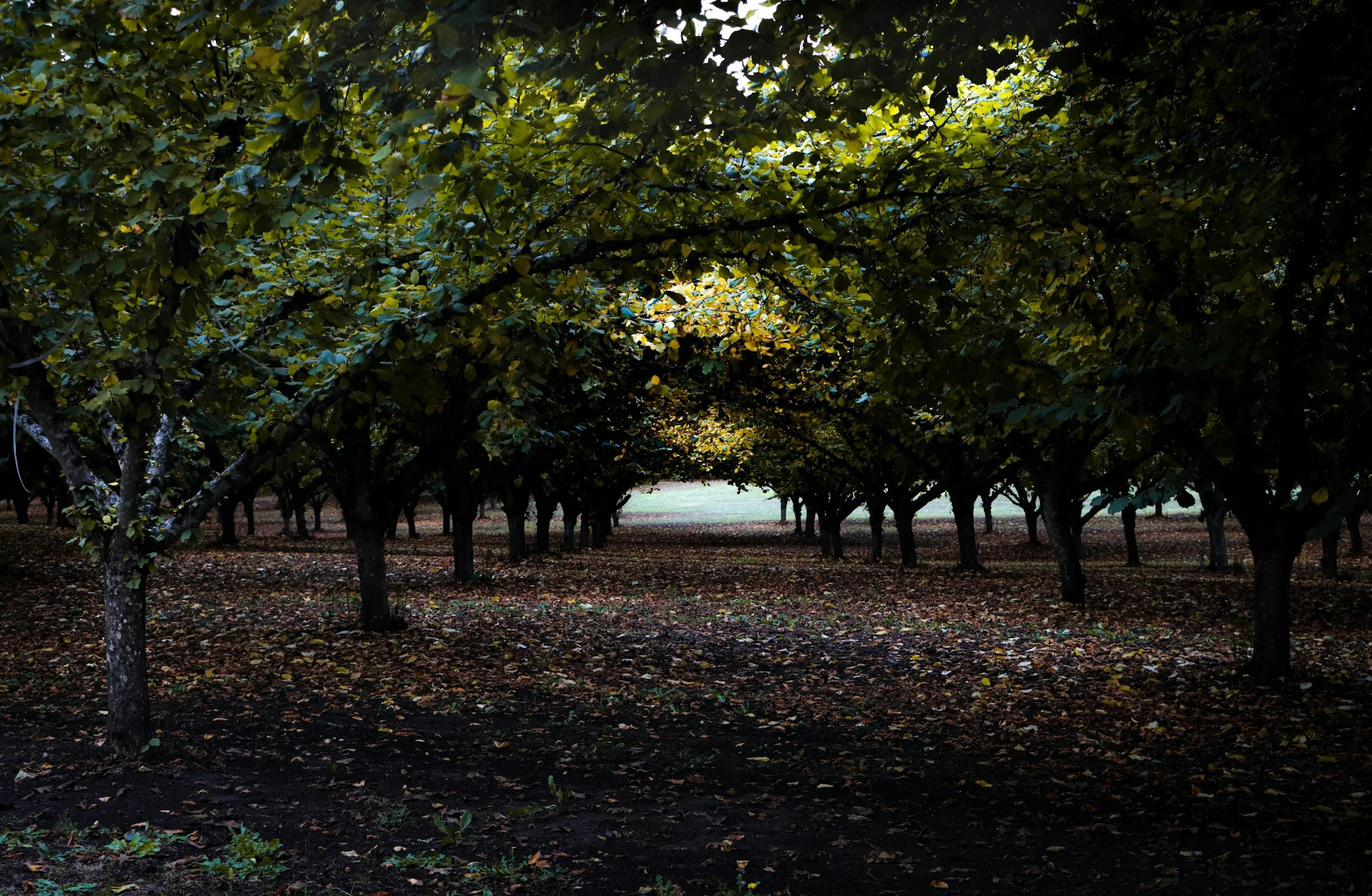
5 I made me gardens and orchards, and I planted trees in them of all kind of fruits:
6 I made me pools of water, to water therewith the wood that bringeth forth trees:
7 I got me servants and maidens, and had servants born in my house; also I had great possessions of great and small cattle above all that were in Jerusalem before me:
8 I gathered me also silver and gold, and the peculiar treasure of kings and of the provinces: I gat me men singers and women singers, and the delights of the sons of men, as musical instruments, and that of all sorts.
9 So I was great, and increased more than all that were before me in Jerusalem: also my wisdom remained with me.
10 And whatsoever mine eyes desired I kept not from them, I withheld not my heart from any joy; for my heart rejoiced in all my labour: and this was my portion of all my labour.
11 Then I looked on all the works that my hands had wrought, and on the labour that I had laboured to do: and, behold, all was vanity and vexation of spirit, and there was no profit under the sun.
Perhaps the whole course of this world’s experience does not furnish a more vivid picture of the unsatisfactory nature of earthly greatness. No element of rest or pleasure seems to be wanting. And yet the result is barren indeed. It is the converse of the Christian. He seems to be “possessing all things;” yet in reality it is — “having nothing.” (Comp. 2 Cor. 6:10) God employed Solomon not only to shew the picture, but to shew it — as we have before hinted from his own experience. He therefore poured in upon him the full confluence of earthly happiness, that he might see, and prove, and tell its utter insufficiency for rest. Here is therefore, ‘not only that general map of the world, that all things are vanity and vexation of spirit, but many other more particular cards.’ (Lord Bacon’s Advancement of Learning, B. II. xxiii. 41.) The many broken cisterns that he had tried — the wormwood that he had tasted from so many streams of earthly enjoyment — all set forth in detail a vivid picture fraught with instruction.
Solomon’s metropolis must have been the wonder of the world. He made himself great works. His houses, from their description, must have been wonderful buildings, both as to art and magnificence* — framed, probably, like the buildings of Babylon, for state or for pleasure. (Dan. 4:28-30) His vineyards, orchards, and gardens, were filled with trees (Cant. 8:11; 6:2; 4:13), pools of water, with some mechanical contrivance for conveying it. (Comp. 2 Kings 18:17; 20:20) His retinue of servants, no less than his house, commanded the Queen of Sheba’s highest admiration. (1 Kings 10:5-8) His extensive herds and flocks (1 Kings 4:23, 26, 28) were beyond what had heretofore been known. Immense treasures of silver and gold — all that was rare and precious — flowed in from all quarters. (1 Kings 9:26-28; 10:10, 14, 15, 25, 27, 28) Vocal and instrumental music ministered to his indulgence. (Comp. 2 Sam. 19:35; 2 Chron. 35:25) His intellectual wisdom remained with him (alas! his spiritual wisdom had departed), to give full scope to his comprehensive mind. Added to this — he had the most free and unabated enjoyment of his resources. There was little of outward tumult to disturb. (1 Kings 4:25) — All therefore that royal treasures could procure, largeness of heart desire, vast wisdom contrive — this was the portion of his labour — the rejoicing of his heart.
And yet, when he looked back on all his works which he had wrought, and the labour which he had laboured, it seemed only as the chasing of shadows. The pleasure faded with the novelty. The appetite was palled without satisfaction. The sad vacuity still remained — a wearisome vexation, as if ‘he had been abundantly filled with the wind,’ (Beza in loco.) or “feeding upon ashes.” (Isa. 44:20) Here, then, is the man, who drank the fullest cup of earth’s best joy — who ‘set nature on the rack to confess its uttermost strength for the delighting and satisfying of man.’ (Leighton’s Sermon on Ps. 119:96) What the result is, hear from his own mouth — vanity and vexation. ‘To so small a purpose is it’ — as Lord Bacon remarks — ‘to have an erected face towards heaven, and a perpetual grovelling spirit upon earth, eating dust, as doth the serpent.’ (Advancement of Learning, ut supra.) Is not, then, the lowest condition in godliness far happier and far safer than the highest ground of earthly prosperity? And yet so strong is the spell of delusion, that Solomon’s experiment continues to be tried with the same unvarying result — There is no profit under the sun. ‘The man wakes from his dream, and finds that he possesses not an atom of the rich possessions he had dreamed of.’ (Lorin.) Take the lesson from one of this world’s brightest favourites: ‘I shall never’ — wrote Sir Walter Scott at the last — ‘see the threescore and ten, and shall be summed up at a discount. No help for it, and no matter either.’ ** In so dark a cloud set one of the finest suns of human intellect!
Unrestrained desire was the source of this vanity and vexation. He would keep back from his eyes nothing that they desired. How little was this in the spirit of his father’s prayer — “Turn away mine eyes from beholding vanity!” *** Wisdom’s voice warns not to cast one hankering look toward the wilderness. Its unholy breath fades the freshness and purity of our enjoyment. It is in the spiritual world that we realize things in their true colour. ‘The empire of the whole world’ — said the noble Luther — ‘is but a crust to be thrown to a dog.’ (Quoted by Cecil) The highest honour in science forced from Henry Martyn the confession at the moment of success — ‘I have grasped a shadow!’ (Life, Part 1.)
Mistake not, then, the glare of this world’s glory for solid happiness. God would have us rejoice in our labour — enjoy our earthly blessings, but not rest in them — “Rejoice, as though we rejoiced not.” (See 1 Cor. 7:29-31) A momentary pleasure is all that can be looked for. Let earth be the cistern only, not the fountain. Let its best blessings be loved after him — for him — as the sunbeam of his love. Let nothing of earth be our rest — God never intended so poor a portion for his redeemed ones. Our rest is built upon unchangeable promises. Meanwhile the real joy is, when God is the centre, and the Saviour (as one of the German Reformers beautifully expresses it) is to us ‘the treasure and the key of all the good things of God.’ (Brentius in loco. 12mo. 1528) What were the pleasures of Solomon’s earthly Paradise, compared with the unspeakable delight of “eating of the tree of life, which is in the midst of the Paradise of God!” (Rev. 2:7)
— Charles Bridges (1794-1869)
* 1 Kings 7:1-13; 9:15-17, 19. The splendid remains of art, which are still found in the countries under his rule, have been ascribed to him. But the Grecian style of architecture seems to point to a much later date. ‘The house that he built was one of the sights that overwhelmed the Queen of Sheba with astonishment.’ (1 Kings 10:4) Mr. Fergusson ably contends for the analogy of Solomon’s houses to the Assyrian palaces. — Nineveh and Persepolis Restored, Chapter on Jerusalem, pp. 225, &c. See also Layard’s Nineveh and Babylon, pp. 642-650.
** Lockhart’s Life, vol. 9, pp. 61, 62. ‘We cannot wonder at this dark passage, if the judgment given by one of our first writers be correct in any degree. ‘Nothing is more notable or sorrowful in Scott’s mind, than his incapacity of steady belief in anything. … He is educated a Presbyterian, and remains one, because he thinks it is the most sensible thing he can do, if he is to live in Edinburgh. But he thinks Romanism more picturesque, and profaneness more gentlemanly — does not see that anything affects human life, but love, courage, and destiny. Throughout all his work there is no evidence of any purpose, but to wile away the hour. All his thoughts were in their outcome and end, less than nothing and vanity.’ — Ruskin’s Modern Painters, vol. 3 pp. 270-272.
*** Ps. 119:37 See the patriarch’s wise resolve, Job 31:1. Comp. Augustine’s humbling and instructive exercises — ‘Suffer not these to hold possession of my soul. Let my God rather be Lord of it, who made all these. Very good they be indeed; yet is he very good, not they.’ — Confess. Book x. c. 34.
