Ecclesiastes 11:3-4
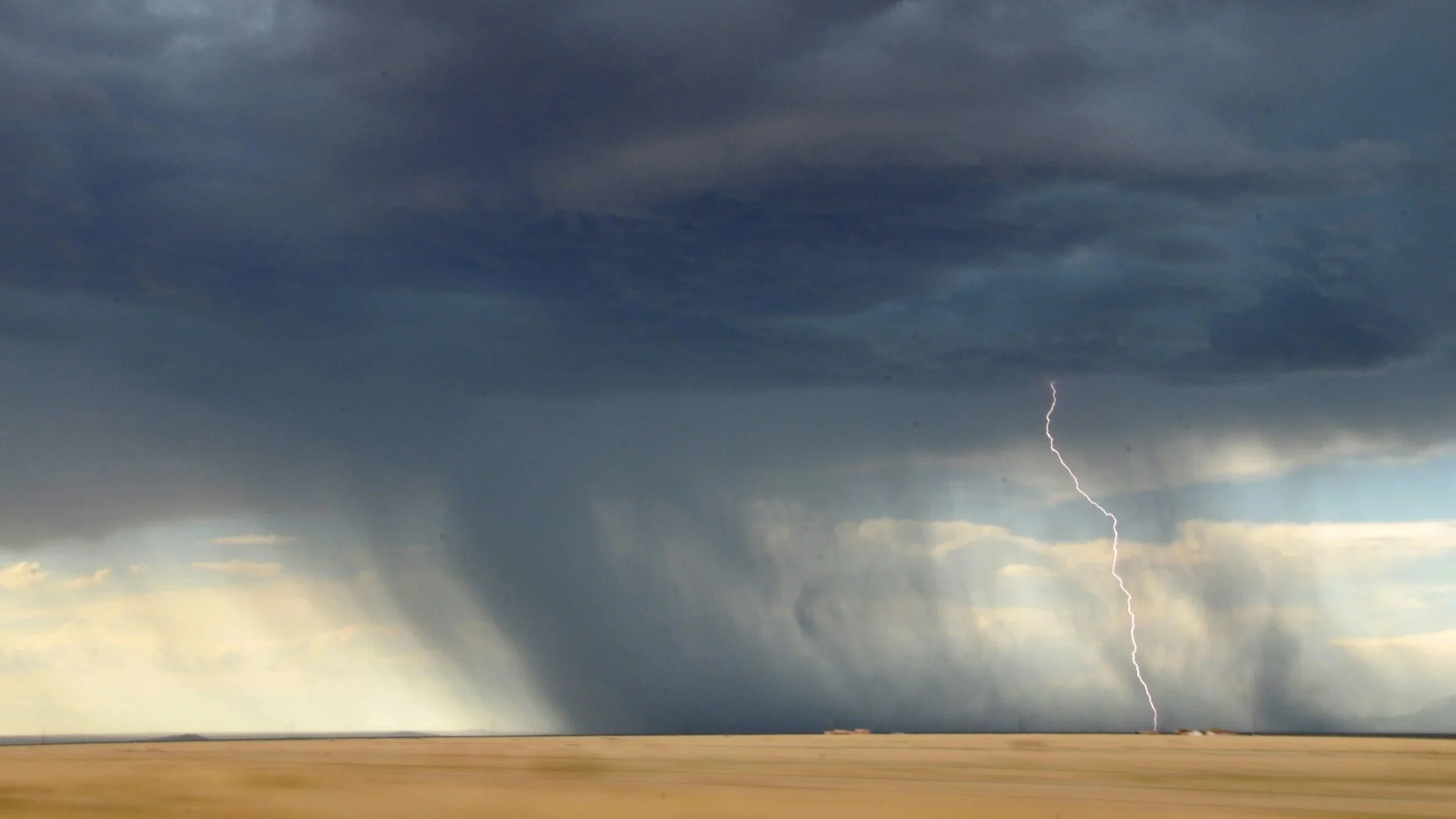
3 If the clouds be full of rain, they empty themselves upon the earth: and if the tree fall toward the south, or toward the north, in the place where the tree falleth, there it shall be.
4 He that observeth the wind shall not sow; and he that regardeth the clouds shall not reap.
Solomon abounds in happy illustrations. (Mercer.) Here he pictures the sun exhaling its watery vapours from the earth, not to retain, but to discharge them, that they may break as clouds ‘big with blessings’ upon the earth again. And is not the man of God the cloud full of rain — blessed, as a child of Abraham, that he may be made “a blessing?” (Gen. 12:2) The blessing will not be lost. There is good security for the return of well-principled benevolence. Where it has been dispensed, there let it be looked for: there it will be found, here or hereafter — just as the tree — in the place where it falleth — whether towards the south or towards the north — there it shall be.
Let me ask then — what blessing am I bringing to my fellow-creatures — in the family — in the Church — in the world? Does my profession attract and recommend my principles? Are those around me enriched by my gifts and graces? Are they benefited by my prayers and good service? The power to do good flows from the willingness to do it. The very breathing of the heart is the principle of love. Let me not wait for the call of importunity; but hasten at once into the sphere of practical work. Splendid services are not always required; but acts of kindness to the weakest and meanest of his people, worked out in the true spirit of love to himself. (Matt. 25:40)
May not the accommodation of Solomon’s figure place it vividly before our eyes — how short our time of work may be — how soon — “now” even the “axe may be laid to the root of the tree” (Matt. 3:10) and our state unchangeably fixed for eternity? Where the tree falleth, there shall it be. Death changes, purifies nothing. Inexpressibly solemn will be the sentence pronounced — “He that is unjust, let him be unjust still; and he that is filthy, let him be filthy still; and he that is righteous, let him be righteous still; and he that is holy, let him be holy still.” (Rev. 22:11)
Solomon still seems to have in his eye the dispensing of charity. And he is led to remark how trifling hindrances damp its glow, and restrain its exercise. The man who is constantly observing the wind, and thinking how every gust will blow away his seed, will never sow. Nor will he, who in feebleness of purpose regards the clouds, ever reap. Just so — little objections of doubt as to the fitness of objects, under the feigned name of prudence, occupy the mind, and the season of opportunity passes away. So much for the literal figure. Lord Bacon gives a more general application, and remarks upon it, that there is no greater impediment of action, than an over-curious observance of time and season. He adds, ‘A man must make his opportunity, as oft as find it.’ (Advancement of Learning, Book ii. C. xxiii.)
But this expressive figure describes a large class of Christian professors of the same “doubtful mind” (Luke 12:29) forming pretences against the present season of doing good, and putting off duty to a more fitting time. This is the man, who would not sow in wind or rain, lest his seed should be blown away, and his harvest lost. Whereas by yielding to present discouragements, he never does his business to good purpose, and really loses his harvest. “The sluggard will not plow by reason of the cold; therefore shall he beg in harvest, and have nothing.” (Prov. 20:4) Mark the present call to duty — the opportunity of good now put into our hands; not letting future contingencies in the hand of God frame an excuse for delay of service.
In our wider sphere of Christian responsibilities take the same warning. A measure of discouragement will always be connected with present duties. A plausible excuse for delay will never be wanting. To-morrow will be more favourable — the storm will be over, and our business will be done with less hazard. So says the trifler in his own delusion. But in fact the weather is not in fault. There is a want of spring in the heart — a want of decided purpose for God. He flatters himself that there will be a better and less hazardous time than now — the threatening storm will have blown over — and he will be more free for the whole-hearted service. But the real mountain is within — “the evil heart of unbelief — the hardening deceitfulness of sin.” (Heb. 3:12-13) The faithless, sluggish heart is under the power of the great enemy, beclouding his path, palsying his strength, raising mountains of difficulties in the way. Activity of mind, promptness of habit, determination of purpose — let all be brought into exercise under the overcoming power of a living faith. It is a great work of self-possession to rise above present discouragement — not to magnify every trifling difficulty, or to start objections against present duty. This is only “the slothful man” planting “his hedge of thorns” or crying out in cowardly fear — “There is a lion in the way — a lion in the streets.” (Prov. 15:19; 22:13)
This well-regulated habit will bring a deep and vital influence for good over our whole character. The trifling discouragements of the winds and the clouds are the appointed trials of faith. And when does our God honour faith, till he has first tried it? Or when does he fail to honour it, either in the trial or out of it? (See 1 Pet. 2:7) How little should we have known of the power of faith, the privilege of prayer, the preciousness of the promises, the faithfulness and sympathy of the Saviour, if difficulties had not shewn to us our weakness, and made the Gospel a Divine reality to our souls! The victory over the lesser difficulties strengthens us in conflict with the greater. The triumph will be complete, and the crown glorious.
Still an halting spirit quenches the glow of Christian energy. Feeble effort ensures defeat. One prompt, practical exercise is worth an hour’s deliberation. Do not despise the smallest success. Five minutes’ prayer for this object may be worth a world. Our present happiness — so far as we realize it — consists in an intelligent and affectionate preference of God — solemnly — deliberately choosing him, in opposition to everything that is constantly drawing us from him. There is no indecision here. Trifling discouragements have now no weight. They are cast upon God — not that they may be removed, but that enduring perseverance may be vouchsafed under them. Wind and clouds no more hinder work. ‘When God calls — when grace moves — when the heart feels — when Christ is nigh — there may be then risks and difficulties, both wind and clouds; yet that is the time for sowing, and that the time of reaping; that is “the accepted time, and that the day of salvation.”’ (Sermon. By Rev. Josiah Bateman, p. 237.)
— Charles Bridges (1794-1869)
