Deuteronomy 14:3-21
3 Thou shalt not eat any abominable thing.
4 These are the beasts which ye shall eat: the ox, the sheep, and the goat,
5 The hart, and the roebuck, and the fallow deer, and the wild goat, and the pygarg, and the wild ox, and the chamois.
6 And every beast that parteth the hoof, and cleaveth the cleft into two claws, and cheweth the cud among the beasts, that ye shall eat.
7 Nevertheless these ye shall not eat of them that chew the cud, or of them that divide the cloven hoof; as the camel, and the hare, and the coney: for they chew the cud, but divide not the hoof; therefore they are unclean unto you.
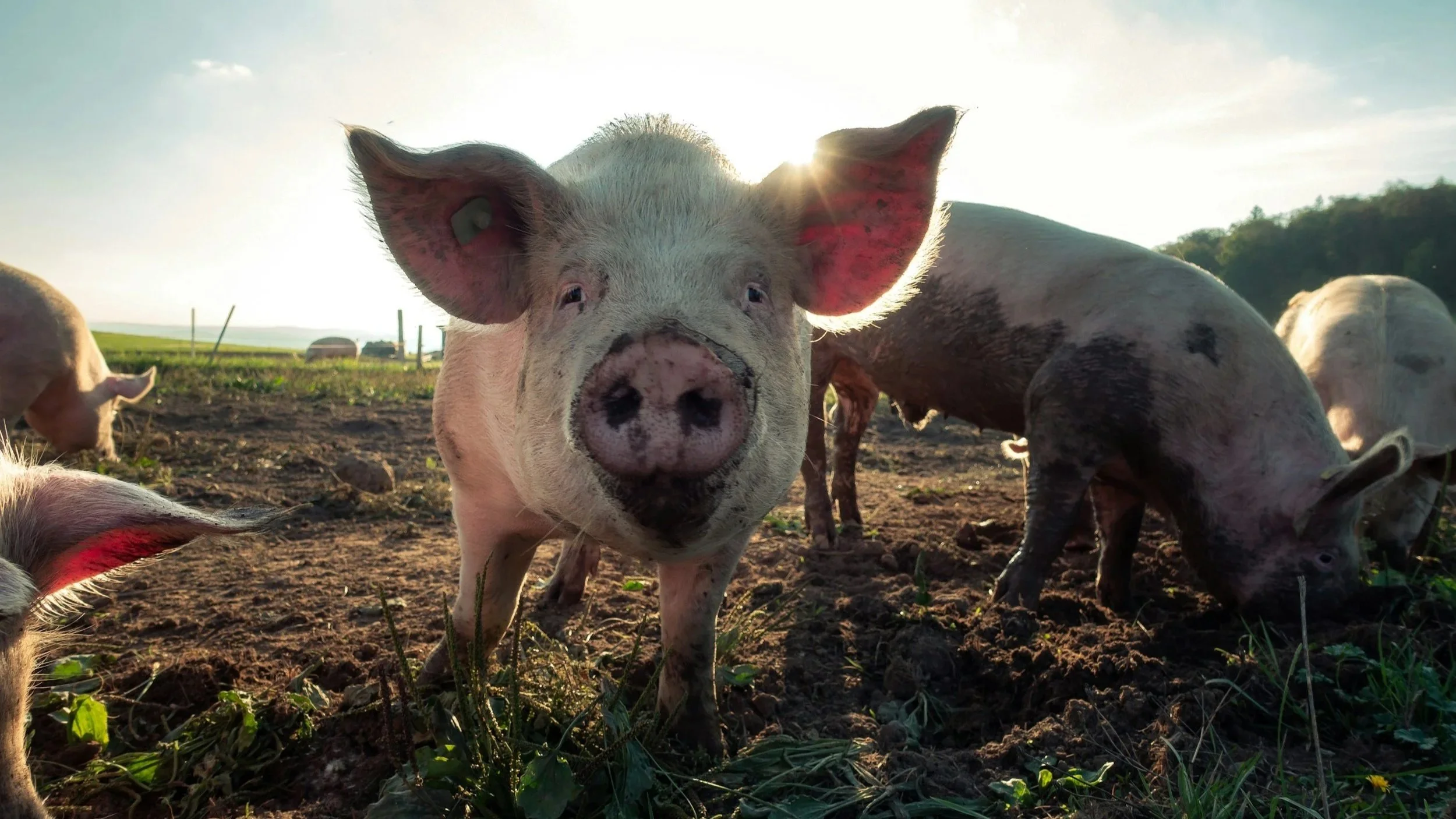
8 And the swine, because it divideth the hoof, yet cheweth not the cud, it is unclean unto you: ye shall not eat of their flesh, nor touch their dead carcase.
9 These ye shall eat of all that are in the waters: all that have fins and scales shall ye eat:
10 And whatsoever hath not fins and scales ye may not eat; it is unclean unto you.
11 Of all clean birds ye shall eat.
12 But these are they of which ye shall not eat: the eagle, and the ossifrage, and the ospray,
13 And the glede, and the kite, and the vulture after his kind,
14 And every raven after his kind,
15 And the owl, and the night hawk, and the cuckow, and the hawk after his kind,
16 The little owl, and the great owl, and the swan,
17 And the pelican, and the gier eagle, and the cormorant,
18 And the stork, and the heron after her kind, and the lapwing, and the bat.
19 And every creeping thing that flieth is unclean unto you: they shall not be eaten.
20 But of all clean fowls ye may eat.
21 Ye shall not eat of anything that dieth of itself: thou shalt give it unto the stranger that is in thy gates, that he may eat it; or thou mayest sell it unto an alien: for thou art an holy people unto the Lord thy God. Thou shalt not seethe a kid in his mother's milk.
Moses here tells the people of Israel they must be singular in their meat. Observe,
1. Many sorts of flesh which were wholesome enough, and which other people did commonly eat, they must religiously abstain from as unclean. This law we had before Lev. 11:2, where it was largely opened. It seems plainly, by the connection here, to be intended as a mark of peculiarity; for their observance of it would cause them to be taken notice of in all mixed companies as a separate people, and would preserve them from mingling themselves with, and conforming themselves to, their idolatrous neighbours.
Concerning beasts, here is a more particular enumeration of those which they were allowed to eat then was in Leviticus, to show that they had no reason to complain of their being restrained from eating swine’s flesh, and hares, and rabbits (which were all that were then forbidden, but are now commonly used), when they were allowed so great a variety, not only of that which we call butcher’s meat (v. 4), which alone was offered in sacrifice, but of venison, which they had great plenty of in Canaan, the hart, and the roe-buck, and the fallow deer (v.5), which, though never brought to God’s altar, was allowed them at their own table. See Deut. 12:22. When of all these (as Adam of every tree of the garden) they might freely eat, those were inexcusable who, to gratify a perverse appetite, or (as should seem) in honour of their idols, and in participation of their idolatrous sacrifices, ate swines’ flesh, and had broth of abominable things (made so by this law) in their vessels, Isa. 65:4.
Concerning fish there is only one general rule given, that whatsoever had not fins and scales (as shell-fish and eels, besides leeches and other animals in the water that are not proper food) was unclean and forbidden, v. 9-10.
No general rule is given concerning fowl, but those are particularly mentioned that were to be unclean to them, and there are few or none of them which are here forbidden that are now commonly eaten; and whatsoever is not expressly forbidden is allowed, v. 11-20. Of all clean fowls you may eat.
They are further forbidden: First, to eat the flesh of any creature that died of itself, because blood was not separated from it, and, besides the ceremonial uncleanness which it lay under (from Lev. 11:39), it is not wholesome food, nor ordinarily used among us, except by the poor. Secondly, to seethe a kid in its mother’s milk, either to gratify their own luxury, supposing it a dainty bit, or in conformity to some superstitious custom of the heathen. The Chaldee paraphrasts read it, Thou shalt not eat flesh-meats and milk-meats together; and so it would forbid the use of butter as sauce to any flesh.
2. Now as to all these precepts concerning their food,
It is plain in the law itself that they belonged only to the Jews, and were not moral, nor of perpetual use, because not of universal obligation; for what they might not eat themselves they might give to a stranger, a proselyte of the gate, that had renounced idolatry, and therefore was permitted to live among them, though not circumcised; or they might sell it to an alien, a mere Gentile, that came into their country for trade, but might not settle it, v. 21. They might feed upon that which an Israelite might not touch, which is a plain instance of their peculiarity, and their being a holy people.
It is plain in the gospel that they are now antiquated and repealed. For every creature of God is good, and nothing now to be refused, or called common and unclean, 1 Tim. 4:4.
— Matthew Henry (1662-1714)
