
Obadiah 1:5
The Prophet shows in this verse that the calamity with which God was resolved to afflict the Idumeans would not be slight, for nothing would be left among them; and he amplifies what he says by a comparison. When one is plundered of his property by thieves, he grieves, that what he had acquired by much labour through life, has been in one moment taken from him: and when any one has spent labour and expense in cultivating his vineyard, and another takes away its fruit, he complains of his great misfortune, that he had lost his property and his labour in the cultivation of his vineyard, while another devours its fruit. But the Prophet intimates that God would not be content with such kind of punishment as to the Idumeans.

Luke 2:8-20
We see in them no doubts, or questionings, or hesitation. Strange and improbable as the tidings might seem, they at once act upon them. They went to Bethlehem in haste. They found everything exactly as it had been told them. Their simple faith received a rich reward. They had the mighty privilege of being the first of all mankind, after Mary and Joseph, who saw with believing eyes the new-born Messiah. They soon returned, “glorifying and praising God” for what they had seen.

Psalm 32:8-9
“I will instruct thee and teach thee in the way which thou shalt go.” Here the Lord is the speaker, and gives the Psalmist an answer to his prayer. Our Saviour is our instructor. The Lord himself deigns to teach his children to walk in the way of integrity, his holy word and the monitions of the Holy Spirit are the directors of the believer’s daily conversation. We are not pardoned that we may henceforth live after our own lusts, but that we may be educated in holiness and trained for perfection. A heavenly training is one of the covenant blessings which adoption seals to us: “All thy children shall be taught by the Lord.” Practical teaching is the very best of instruction, and they are thrice happy who, although they never sat at the feet of Gamaliel, and are ignorant of Aristotle, and the ethics of the schools, have nevertheless learned to follow the Lamb whithersoever he goeth.

Psalm 105:32-35
The description is not strained when we read, “And did eat up all the herbs in their land, and devoured the fruit of their ground.” Nothing escapes these ravenous creatures, they even climb the trees to reach any remnant of foliage which may survive. Commissioned as these were by God, we may be sure they would do their work thoroughly, and leave behind them nothing but a desolate wilderness.

Malachi 3:10
But as rain itself would not suffice, he adds, I will unsheath, &c.; for רק, rek, means properly to unsheath; but as this metaphor seems unnatural, some have more correctly rendered it, “I will draw out.” Unnatural also is this version, “I will empty out a blessing.” and it perverts the meaning. Let us then follow what I have stated as the first — that a blessing is drawn out from God when the earth discharges its office, and becomes fertile or fruitful. We hence see that God is not only in one way bountiful to us, but he also intends by various processes to render us sinsible of his kindness: he rains from heaven to soften the earth, that it may in its bosom nourish the corn, and then send it forth from its bowels, as though it extended its breast to us; and further, God adds his blessing, so as to render the rain useful.

Mark 2:13-22
These words, we must of course see, were a parable. They were spoken with a special reference to the question which the Pharisees had just raised: “Why do the disciples of John fast, but thy disciples fast not?” Our Lord’s reply evidently means, that to enforce fasting among His disciples would be inexpedient and unseasonable. His little flock was as yet young in grace, and weak in faith, knowledge, and experience. They must be led on softly, and not burdened at this early stage with requirements which they were not able to bear. Fasting, moreover, might be suitable to the disciples of him who was only the Bridegroom’s friend, who lived in the wilderness, preached the baptism of repentance, was clothed in camel’s hair, and ate locusts and wild honey. But fasting was not equally suitable to the disciples of Him, who was the Bridegroom Himself, brought glad tidings to sinners, and came living like other men. In short, to require fasting of his disciples at present, would be putting “new wine into old bottles.” It would be trying to mingle and amalgamate things that essentially differed.

Luke 3:15-20
The visible Church is now a mixed body. Believers and unbelievers, holy and unholy, converted and unconverted, are now mingled in every congregation, and often sit side by side. It passes the power of man to separate them. False profession is often so like true, and grace is often so weak and feeble, that, in many cases, the right discernment of character is an impossibility. The wheat and the chaff will continue together until the Lord returns.

Mark 4:26-29
The wisest farmer on earth can never explain all that takes place in a grain of wheat, when he has sown it. He knows the broad fact that unless he puts it into the land, and covers it up, there will not be an ear of corn in time of harvest. But he cannot command the prosperity of each grain. He cannot explain why some grains come up and others die. He cannot specify the hour or the minute when life shall begin to show itself. He can not define what that life is. These are matters he must leave alone. He sows his seed, and leaves the growth to God. “God giveth the increase.”* (1 Cor. 3:7)

Mark 12:1-12
Let us observe, in the first place, God’s special kindness to the Jewish Church and nation. He gave to them peculiar privileges. He dealt with them as a man deals with a piece of land which he separates and hedges in for “a vineyard.” He gave them good laws and ordinances. He planted them in a goodly land, and cast out seven nations before them. He passed by greater and mightier nations to show them favor. He let alone Egypt, and Assyria, and Greece, and Rome, and showered down mercies on a few millions of people in Palestine. The vineyard of the Lord was the house of Israel. No family under heaven ever received so many signal and distinguishing privileges as the family of Abraham.

Psalm 29:5-6
Noble trees fall prostrate beneath the mysterious bolt, or stand in desolation as mementoes of its power. Lebanon itself is not secure, high as it stands, and ancient as are its venerable woods: ”Yea, the Lord breaketh the cedars of Lebanon.” The greatest and most venerable of trees or men, may not reckon upon immunity when the Lord is abroad in his wrath. The gospel of Jesus has a like dominion over the most inaccessible of mortals; and when the Lord sends the word, it breaks hearts far stouter than the cedars.
Psalm 44:11
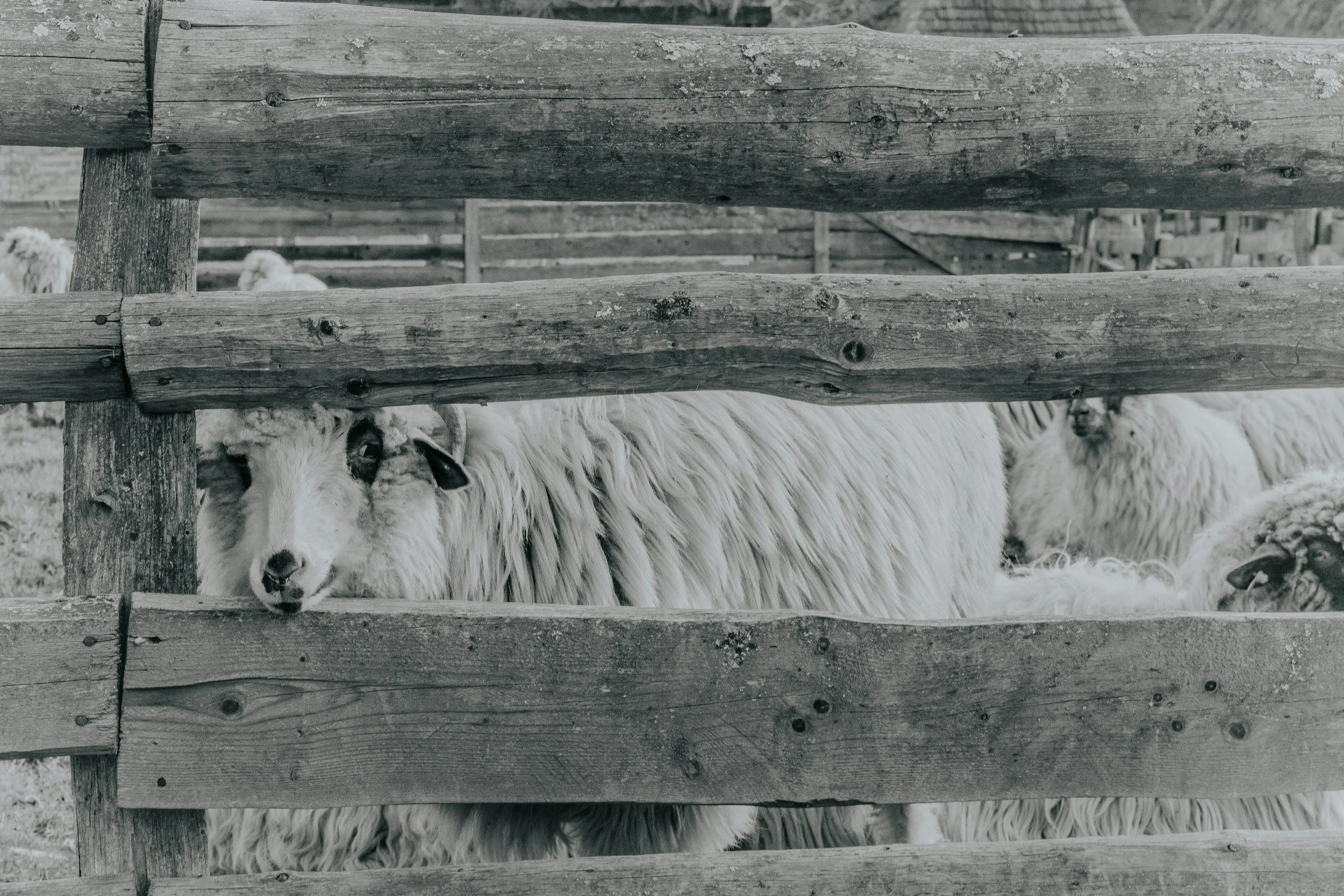
“Thou has given us like sheep appointed for meat.” As sheep are slaughtered for food, so were the people slain in flocks, with ease, and frequency. Not with the dignity of sacrifice, but with the cruelty of the shambles, were they put to death. God appeared to give them up like sheep allotted to the butcher, to abandon them as the hireling abandons the flock to wolves. The plaint is bitterly eloquent. “And hast scattered us among the heathen.” Many were carried into captivity, far off from the public worship of the temple of God, to pine as exiles among idolaters. All this is ascribed to the Lord as being allowed by him, and even appointed by his decree. It is well to trace the hand of God in our sorrows, for it is surely there.
Job 1:13-17
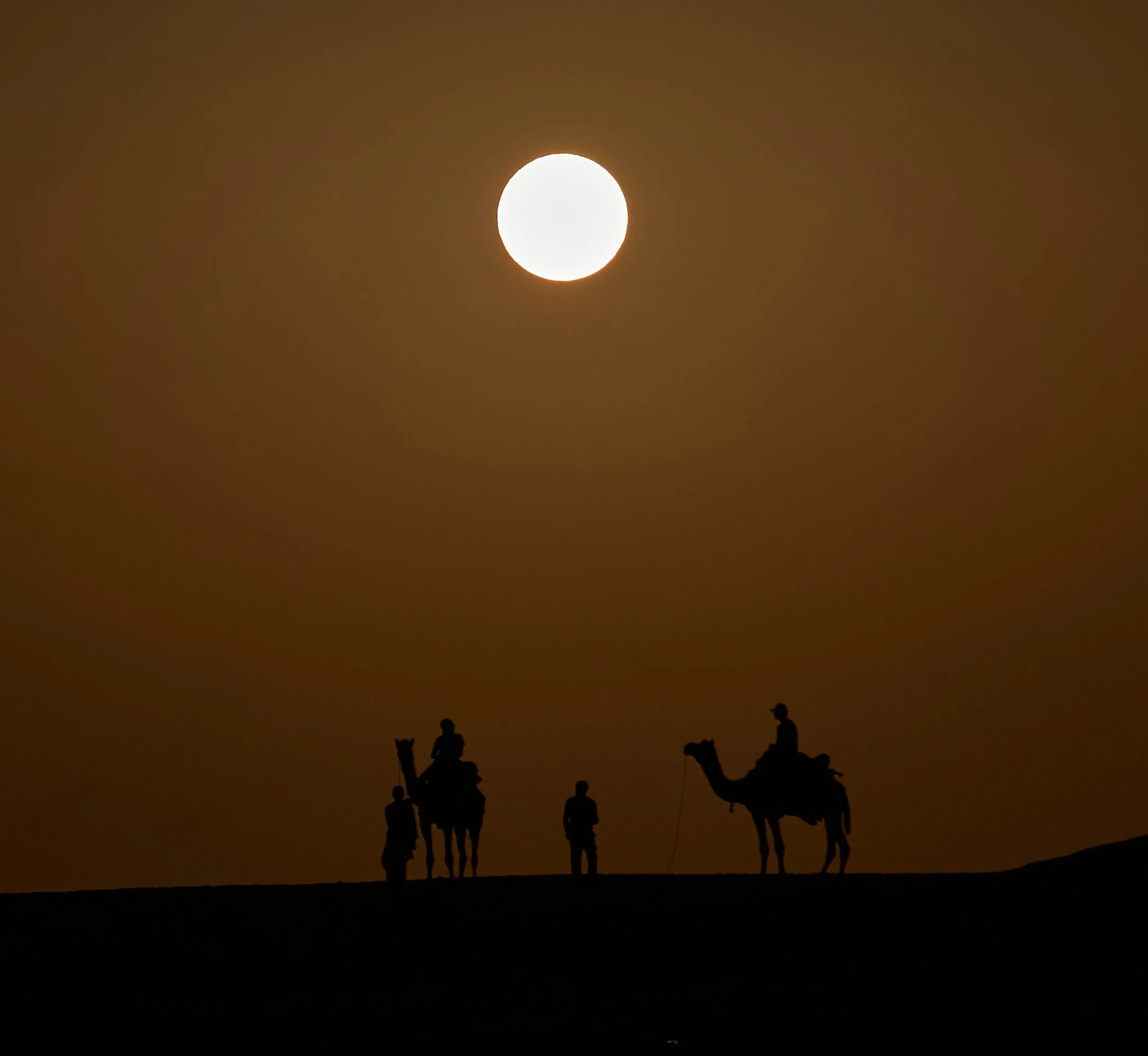
He had 3000 camels, and servants tending them; and he lost them all at the same time by the Chaldeans, who came in three bands, and drove them away, and slew the servants, Job 1:17. If the fire of God, which fell upon Job’s honest servants, who were in the way of their duty, had fallen upon the Sabeans and Chaldean robbers who were doing mischief, God’s judgements therein would have been like the great mountains, evident and conspicuous; but when the way of the wicked prospers, and they carry off their booty, while just and good men are suddenly cut off, God’s righteousness is like the great deep, the bottom of which we cannot find, Ps. 36:6.

Luke 4:22-32
Such ought to be the conduct of all the people of Christ. Whatever the work they are called to do, they should patiently continue in it, and not give up for want of success. Whether preachers, or teachers, or visitors, or missionaries, they must labor on and not faint. There is often more stirring in the hearts and consciences of people than those who teach and preach to them are at all aware of. There is preparatory work to be done in many a part of God’s vineyard, which is just as needful as any other work, though not so agreeable to flesh and blood. There must be sowers as well as reapers. There must be some to break up the ground and pick out the stones, as well as some to gather in the harvest. Let each labor on in his own place. The day comes when each shall be rewarded according to his work.

Psalm 24:1
Man lives upon ”the earth,” and parcels out its soil among his mimic kings and autocrats; but the earth is not man’s. He is but a tenant at will, a leaseholder upon most precarious tenure, liable to instantaneous ejectment. The great Landowner and true Proprietor holds his court above the clouds and laughs at the title-deeds of worms of the dust. The fee-simple is not with the lord of the manor nor the freeholder, but with the Creator. The ”fulness” of the earth may mean its harvests, its wealth, its life, or its worship; in all these senses the Most High God is Possessor of all. The earth is full of God; he made it full and he keeps it full, notwithstanding all the demands which living creatures make upon its stores.
John 21:15-17
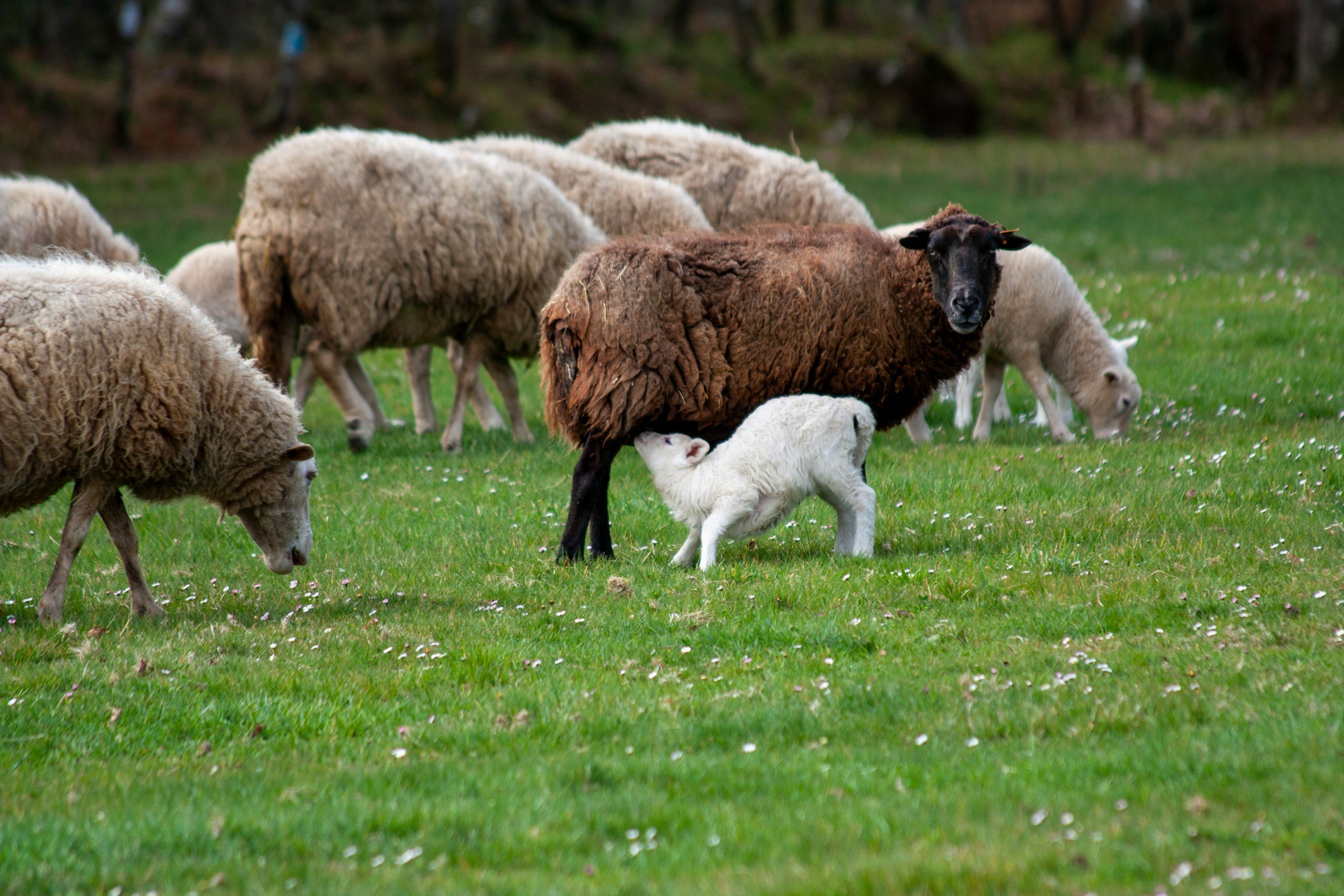
Three times we find Him saying, “Feed” my flock: once, “Feed my lambs;” and twice my “sheep.” Can we doubt for a moment that this thrice-repeated charge was full of deep meaning? It was meant to commission Peter once more to do the work of an Apostle, notwithstanding his recent fall. But this was only a small part of the meaning. It was meant to teach Peter and the whole Church the mighty lesson, that usefulness to others is the grand test of love, and working for Christ the great proof of really loving Christ. It is not loud talk and high profession; it is not even impetuous, spasmodic zeal, and readiness to draw the sword and fight, — it is steady, patient, laborious effort to do good to Christ’s sheep scattered throughout this sinful world, which is the best evidence of being a true-hearted disciple. This is the real secret of Christian greatness. It is written in another place, “Whosoever will be great among you, let him be your minister; and whosoever will be chief among you, let him be your servant: even as the Son of man came not to be ministered unto, but to minister.” (Matt. 20:26-28)

John 1:29
He does this by taking it upon himself. He is the Lamb of God, that bears the sin of the world; so the margin reads it. He bore sin for us, and so bears it from us; he bore the sin of many, as the scape-goat had the sins of Israel put upon its head, Lev. 16:21. God could have taken away the sin by taking away the sinner, as he took away the sin of the old world; but he has found out a way of abolishing the sin, and yet sparing the sinner, by making his Son sin for us.

Luke 3:7-14
The subject of hell is always offensive to human nature. The minister who dwells much upon it, must expect to find himself regarded as coarse, violent, unfeeling, and narrow-minded. Men love to hear “smooth things,” and to be told of peace, and not of danger. (Is. 30:10) But the subject is one that ought not to be kept back, if we desire to do good to souls. It is one that our Lord Jesus Christ brought forward frequently in His public teachings. That loving Saviour, who spoke so graciously of the way to heaven, has also used the plainest language about the way to hell.

Psalm 67:5-7
“Then shall the earth yield her increase.” Sin first laid a curse on the soil and grace alone can remove it. Under tyrannical governments lands become unproductive; even the land which flowed with milk and honey is almost a wilderness under Turkish rule; but, when the principles of true religion shall have elevated mankind, and the dominion of Jesus shall be universally acknowledged, the science of tillage shall be perfected, men shall be encouraged to labour, industry shall banish penury, and the soil shall be restored to more than its highest condition of fertility. We read that the Lord turneth “a fruitful land into barrenness,” for the wickedness of them that dwell therein, and observation confirms the truth of the divine threatening; but even under the law it was promised, “the Lord God shall make thee plenteous in every work of thine hand, in the fruit of thy cattle, and in the fruit of thy land for good.”

Haggai 1:10-11
He confirms what the last verse contains — that God had made it evident that he was displeased with the people because their zeal for religion had become cold, and, especially, because they were all strangely devoted to their own interest and manifested no concern for building the Temple. Hence, he says, therefore the heavens are shut up and withhold the dew; that is, they distil no dew on the earth: and he adds, that the earth was closed that it produced no fruit; it yielded no increase, and disappointed its cultivators.

Mark 1:16-20
Christ puts honor upon those who, though mean in the world, are diligent in their business, and loving to one another; so those were, whom Christ called. He found them employed, and employed together. Industry and unity are good and pleasant, and there the Lord Jesus commands the blessing, even this blessing, Follow me.