
Genesis 27:37-39
Behold, I have made him thy Lord. Isaac now more openly confirms what I have before said, that since God was the author of the blessing, it could neither be vain nor evanescent. For he does not here magnificently boast of his dignity, but keeps himself within the bounds and measure of a servant, and denies that he is at liberty to alter anything. For he always considers, (which is the truth,) that when he sustains the character of God’s representative, it is not lawful for him to proceed further than the command will bear him. Hence, indeed, Esau ought to have learned form whence he had fallen by his own fault, in order that he might have humbled himself, and might rather have joined himself with his brother, in order to become a partaker of his blessing, as his inferior, than have desired anything separately for himself.

Psalm 105:39-45
“And gave them the lands of the heathen.” He drove out the Canaanites and allotted the lands to the tribes. They were called on to fight, but the Lord wrought so wonderfully that the conquest was not effected by their bow or spear — the Lord gave them the land. “And they inherited the labour of the people,” they dwelt in houses which they had not built, and gathered fruit from vines and olives which they had not planted. They were not settled in a desert which needed to be reclaimed, but in a land fertile to a proverb, and cultivated carefully by its inhabitants. Like Adam, they were placed in a garden. This entrance into the goodly land was fitly celebrated when the ark was being moved to Zion.

Psalm 37:1-3
The Psalm opens with the first precept. It is alas! too common for believers in their hours of adversity to think themselves harshly dealt with when they see persons utterly destitute of religion and honesty, rejoicing in abundant prosperity. Much needed is the command, “Fret not thyself because of evildoers.” To fret is to worry, to have the heart-burn, to fume, to become vexed. Nature is very apt to kindle a fire of jealousy when it sees law-breakers riding on horses, and obedient subjects walking in the mire: it is a lesson learned only in the school of grace, when one comes to view the most paradoxical providences with the devout complacency of one who is sure that the Lord is righteous in all his acts. It seems hard to carnal judgments that the best meat should go to the dogs, while loving children pine for want of it.

Luke 6:39-45
The words of our Lord on this subject are clear and unmistakable. He draws an illustration from a tree, and lays down the broad principle, “every tree is known by his own fruit.” But our Lord does not stop here. He proceeds further to show that a man’s conversation is one indication of his state of heart. “Of the abundance of the heart his mouth speaketh.” Both these sayings are deeply important. Both should be stored up among the leading maxims of our practical Christianity.
1 Timothy 4:3-5
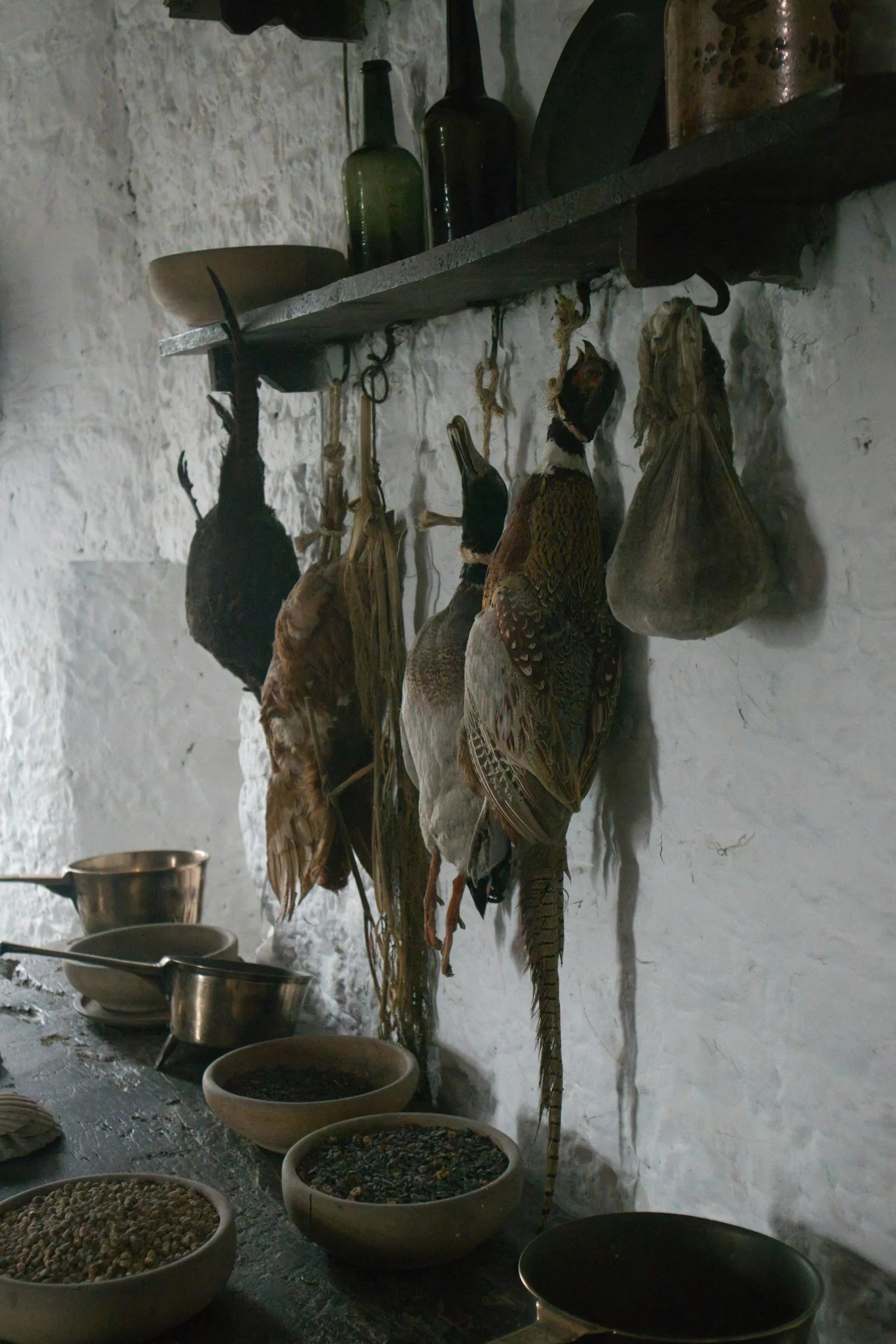
We must not refuse the gifts of God’s bounty, nor be scrupulous in making differences where God has made none; but receive them, and be thankful, acknowledging the power of God the Maker of them, and the bounty of God the giver of them: Every creature of God is good, and nothing to be refused, 1 Tim. 4:4. This plainly sets us at liberty from all the distinctions of meats appointed by the ceremonial law, as particularly that of swine’s flesh, which the Jews were forbidden to eat, but which is allowed to us Christians, by this rule, Every creature of God is good, &c. Observe, God’s good creatures are then good, and doubly sweet to us, when they are received with thanksgiving.—For it is sanctified by the word of God and prayer, 1 Tim. 4:5.

John 1:29-34
This name did not merely mean, as some have supposed, that Christ was meek and gentle as a lamb. This would be truth no doubt, but only a very small portion of the truth. There are greater things here than this! It meant that Christ was the great sacrifice for sin, who was come to make atonement for transgression by His own death upon the cross. He was the true Lamb which Abraham told Isaac at Moriah God would provide. (Gen. 22:8) He was the true Lamb to which every morning and evening sacrifice in the temple had daily pointed. He was the Lamb of which Isaiah had prophesied, that He would be “brought to the slaughter.” (Is. 53:7) He was the true Lamb of which the passover lamb in Egypt had been a vivid type. In short, He was the great propitiation for sin which God had covenanted from all eternity to send into the world. He was God’s Lamb.

Psalm 4:7
“It is better,” said one, “to feel God’s favour one hour in our repenting souls, than to sit whole ages under the warmest sunshine that this world affordeth.” Christ in the heart is better than corn in the barn, or wine in the vat. Corn and wine are but fruits of the world, but the light of God’s countenance is the ripe fruit of heaven. “Thou art with me,” is a far more blessed cry than “Harvest home.” Let my granary be empty, I am yet full of blessings if Jesus Christ smiles upon me; but if I have all the world, I am poor without Him.

Luke 12:13-21
He draws the picture of a rich man of the world, whose mind is wholly set on earthly things. He paints him scheming and planning about his property, as if he was master of his own life, and had but to say, “I will do a thing,” and it would be done. And then he turns the picture, and shows us God requiring the worldling’s soul, and asking the heart-searching question, “whose shall these things be which thou has provided?” “Folly,” he bids us learn, nothing less than “folly,” is the right word by which to describe the conduct of the man who thinks of nothing but his money. The man who “lays up treasure for himself, and is not rich towards God,” is the man whom God declares to be a “fool.”

Habakkuk 3:17-18
The Prophet declares now at large what that rest would be of which he had spoken; it would be even this — that he would not cease to rejoice in God, even in the greatest afflictions. He indeed foresees how grievous the impending punishment would be, and he warns also and arouses the faithful, that they might perceive the approaching judgment of God. He says, Flourish shall not the fig, and no fruit shall be on the vines; fail shall the olive. First, the fig shall not flourish; then, the fields shall produce nothing; and lastly, the cattle and the sheep shall fail. Though the figs produce fruit without flowering, it is not yet an improper use of פָּרַח, perech, which means strictly to bud. He means that the desolation of the land was nigh at hand, and that the people would be reduced to extreme poverty. But it was an instance of rare virtue, to be able to rejoice in the Lord, when occasions of sorrow met him on every side.

Genesis 32:13-21
And took of that which came to his hand. In endeavouring to appease his brother by presents, he does not act distrustfully, as if he doubted whether he should be safe under the protection of God. This, indeed, is a fault too common among men, that when they have prayed to God, they turn themselves hither and thither, and contrive vain subterfuges for themselves: whereas the principal advantage of prayer is, to wait for the Lord in silence and quietness. But the design of the holy man was not too busy and to vex himself, as one discontented with the sole help of God. For although he was certainly persuaded that to have God propitious to him would alone be sufficient, yet he did not omit the use of the means which were in his power, while leaving success in the hand of God.

John 10:1-9
The true sense of the “door” must be sought in our Lord’s own interpretation. It is Christ Himself who is “the door.” The true shepherd of souls is he who enters the ministry with a single eye to Christ, desiring to glorify Christ, doing all in the strength of Christ, preaching Christ’s doctrine, walking in Christ’s steps, and labouring to bring men and women to Christ. The false shepherd of souls is he who enters the ministerial office with little or no thought about Christ, from worldly and self-exalting motives, but from no desire to exalt Jesus, and the great salvation that is in Him. Christ, in one word, is the grand touchstone of the minister of religion.

Psalm 23:2
”He maketh me to lie down in green pastures: he leadeth me beside the still waters.” The Christian life has two elements in it, the contemplative and the active, and both of these are richly provided for. First, the contemplative, ”He maketh me to lie down in green pastures.” What are these ”green pastures” but the Scriptures of truth — always fresh, always rich, and never exhausted? There is no fear of biting the bare ground where the grass is long enough for the flock to lie down in it. Sweet and full are the doctrines of the gospel; fit food for souls, as tender grass is natural nutriment for sheep. When by faith we are enabled to find rest in the promises, we are like the sheep that lie down in the midst of the pasture; we find at the same moment both provender and peace, rest and refreshment, serenity and satisfaction.

Haggai 1:9
Here the Prophet relates again, that the Jews were deprived of support, and that they in a manner pined away in their distress, because they robbed God of the worship due to him. He first repeats the fact, Ye have looked for much, but behold little. It may happen that one is contented with a very slender portion, because much is not expected. They who are satisfied with their own penury are not anxious though their portion of food is but scanty, though they are constrained to feed on acorns. Those who are become hardened in enduring evils, do not seek much; but they who desire much, are more touched and vexed by their penury.

Psalm 37:34-36
“Wait on the Lord.” We have here the eighth precept, and it is a lofty eminence to attain to. Tarry the Lord’s leisure. Wait in obedience as a servant, in hope as an heir, in expectation as a believer. This little word “wait” is easy to say, but hard to carry out, yet faith must do it. “And keep his way.” Continue in the narrow path; let no haste for riches or ease cause unholy action. Let your motto be, “On, on, on,” Never flag, or dream of turning aside. “He that endureth to the end, the same shall be saved.” “And he shall exalt thee to inherit the land.” Thou shalt have all of earthly good which is really good, and of heavenly good there shall be not stint. Exaltation shall be the lot of the excellent.

Genesis 13:8-11
“And Abram said unto Lot.” Moses first states, that Abram no sooner perceived the strifes which had arisen, than he fulfilled the duty of a good householder, by attempting to restore peace among his domestics; and that afterwards, by his moderation, he endeavoured to remedy the evil by removing it. And although the servants alone were contending, he yet does not say in vain, “Let there be no strife between me and thee:” because it was scarcely possible but that the contagion of the strife should reach from the domestics to their lords, although they were in other respects perfectly agreed. He also foresaw that their friendship could not long remain entire, unless he attempted, in time, to heal the insidious evil.

Luke 9:57-62
We learn from this saying that it is impossible to serve Christ with a divided heart. If we are looking back to anything in this world we are not fit to be disciples. Those who look back, like Lot’s wife, want to go back. Jesus will not share His throne with any one, — no, not with our dearest relatives. He must have all our heart or none. No doubt we are to honor father and mother, and love us all around us. But when love to Christ and love to relatives come in collision, Christ must have the preference.

Luke 10:1-7
The first point in our Lord’s charge to the seventy disciples is the importance of prayer and intercession. This is the leading thought with which our Lord opens His address. Before He tells His ambassadors what to do, He first bids them to pray. “Pray ye the Lord of the harvest that He would send forth laborers into his harvest.”

John 15:7-11
In the first place, our Lord declares, “If ye abide in Me, and my words abide in you, ye shall ask what ye will, and it shall be done unto you.” This is a distinct promise of power and success in prayer. And what does it turn upon? We must “abide in Christ,” and Christ’s “words must abide in us.”
To abide in Christ means to keep up a habit of constant close communion with Him, — to be always leaning on Him, resting on Him, pouring out our hearts to Him, and using Him as our Fountain of life and strength, as our chief Companion and best Friend. — To have His words abiding in us, is to keep His sayings and precepts continually before our memories and minds, and to make them the guide of our actions and the rule of our daily conduct and behavior.

Luke 8:26-36
We are told that he “commanded the unclean spirit to come out of the man,” whose miserable condition we have just heard described. At once the unhappy sufferer was healed. The “many devils” by whom he had been possessed were compelled to leave him. Nor is this all. Cast forth from their abode in the man’s heart, we see these malignant spirits beseeching our Lord that He would “not torment” them, or “command them to go out into the deep,” and so confessing His supremacy over them. Mighty as they were, they plainly felt themselves in the presence of One mightier than themselves. Full of malice as they were, they could not even hurt the “swine” of the Gadarenes until our Lord granted them permission.

Psalm 49:14-15
“Like sheep they are laid in the grave.” As dumb, driven cattle, they are hurried to their doom, and are penned in within the gates of destruction. As sheep that go whither they are driven, and follow their leader without thought, so these men who have chosen to make this world their all, are urged on by their passions, till they find themselves at their journey’s end, that end the depths of Hades. Or if we keep to our own translation, we have the idea of their dying peaceably, and being buried in quiet, only that they may wake up to be ashamed at the last great day.