
John 10:1-9
The true sense of the “door” must be sought in our Lord’s own interpretation. It is Christ Himself who is “the door.” The true shepherd of souls is he who enters the ministry with a single eye to Christ, desiring to glorify Christ, doing all in the strength of Christ, preaching Christ’s doctrine, walking in Christ’s steps, and labouring to bring men and women to Christ. The false shepherd of souls is he who enters the ministerial office with little or no thought about Christ, from worldly and self-exalting motives, but from no desire to exalt Jesus, and the great salvation that is in Him. Christ, in one word, is the grand touchstone of the minister of religion.

Psalm 23:2
”He maketh me to lie down in green pastures: he leadeth me beside the still waters.” The Christian life has two elements in it, the contemplative and the active, and both of these are richly provided for. First, the contemplative, ”He maketh me to lie down in green pastures.” What are these ”green pastures” but the Scriptures of truth — always fresh, always rich, and never exhausted? There is no fear of biting the bare ground where the grass is long enough for the flock to lie down in it. Sweet and full are the doctrines of the gospel; fit food for souls, as tender grass is natural nutriment for sheep. When by faith we are enabled to find rest in the promises, we are like the sheep that lie down in the midst of the pasture; we find at the same moment both provender and peace, rest and refreshment, serenity and satisfaction.

Haggai 1:9
Here the Prophet relates again, that the Jews were deprived of support, and that they in a manner pined away in their distress, because they robbed God of the worship due to him. He first repeats the fact, Ye have looked for much, but behold little. It may happen that one is contented with a very slender portion, because much is not expected. They who are satisfied with their own penury are not anxious though their portion of food is but scanty, though they are constrained to feed on acorns. Those who are become hardened in enduring evils, do not seek much; but they who desire much, are more touched and vexed by their penury.

Psalm 37:34-36
“Wait on the Lord.” We have here the eighth precept, and it is a lofty eminence to attain to. Tarry the Lord’s leisure. Wait in obedience as a servant, in hope as an heir, in expectation as a believer. This little word “wait” is easy to say, but hard to carry out, yet faith must do it. “And keep his way.” Continue in the narrow path; let no haste for riches or ease cause unholy action. Let your motto be, “On, on, on,” Never flag, or dream of turning aside. “He that endureth to the end, the same shall be saved.” “And he shall exalt thee to inherit the land.” Thou shalt have all of earthly good which is really good, and of heavenly good there shall be not stint. Exaltation shall be the lot of the excellent.

Genesis 13:8-11
“And Abram said unto Lot.” Moses first states, that Abram no sooner perceived the strifes which had arisen, than he fulfilled the duty of a good householder, by attempting to restore peace among his domestics; and that afterwards, by his moderation, he endeavoured to remedy the evil by removing it. And although the servants alone were contending, he yet does not say in vain, “Let there be no strife between me and thee:” because it was scarcely possible but that the contagion of the strife should reach from the domestics to their lords, although they were in other respects perfectly agreed. He also foresaw that their friendship could not long remain entire, unless he attempted, in time, to heal the insidious evil.

Luke 9:57-62
We learn from this saying that it is impossible to serve Christ with a divided heart. If we are looking back to anything in this world we are not fit to be disciples. Those who look back, like Lot’s wife, want to go back. Jesus will not share His throne with any one, — no, not with our dearest relatives. He must have all our heart or none. No doubt we are to honor father and mother, and love us all around us. But when love to Christ and love to relatives come in collision, Christ must have the preference.

Luke 10:1-7
The first point in our Lord’s charge to the seventy disciples is the importance of prayer and intercession. This is the leading thought with which our Lord opens His address. Before He tells His ambassadors what to do, He first bids them to pray. “Pray ye the Lord of the harvest that He would send forth laborers into his harvest.”

John 15:7-11
In the first place, our Lord declares, “If ye abide in Me, and my words abide in you, ye shall ask what ye will, and it shall be done unto you.” This is a distinct promise of power and success in prayer. And what does it turn upon? We must “abide in Christ,” and Christ’s “words must abide in us.”
To abide in Christ means to keep up a habit of constant close communion with Him, — to be always leaning on Him, resting on Him, pouring out our hearts to Him, and using Him as our Fountain of life and strength, as our chief Companion and best Friend. — To have His words abiding in us, is to keep His sayings and precepts continually before our memories and minds, and to make them the guide of our actions and the rule of our daily conduct and behavior.

Luke 8:26-36
We are told that he “commanded the unclean spirit to come out of the man,” whose miserable condition we have just heard described. At once the unhappy sufferer was healed. The “many devils” by whom he had been possessed were compelled to leave him. Nor is this all. Cast forth from their abode in the man’s heart, we see these malignant spirits beseeching our Lord that He would “not torment” them, or “command them to go out into the deep,” and so confessing His supremacy over them. Mighty as they were, they plainly felt themselves in the presence of One mightier than themselves. Full of malice as they were, they could not even hurt the “swine” of the Gadarenes until our Lord granted them permission.

Psalm 49:14-15
“Like sheep they are laid in the grave.” As dumb, driven cattle, they are hurried to their doom, and are penned in within the gates of destruction. As sheep that go whither they are driven, and follow their leader without thought, so these men who have chosen to make this world their all, are urged on by their passions, till they find themselves at their journey’s end, that end the depths of Hades. Or if we keep to our own translation, we have the idea of their dying peaceably, and being buried in quiet, only that they may wake up to be ashamed at the last great day.

Genesis 33:13-19
My lord knoweth. The things which Jacob alleges, as grounds of excuse, are true; nevertheless he introduces them under false pretexts; except, perhaps, as regards the statement, that he was unwilling to be burdensome and troublesome to his brother. But since he afterwards turns his journey in another direction, it appears that he feigned something foreign to what was really in his mind. He says that he brings with him many encumbrances, and therefore requests his brother to precede him. ”I will follow (he says) at the feet of the children; that is, I will proceed gently as the pace of the children will bear; and thus I will follow at my leisure, until I come to thee in Mount Seir.”

Mark 1:9-20
It is clear, from these words, that the first followers of our Lord were not the great of this world. They were men who had neither riches, nor rank, nor power. But the kingdom of Christ is not dependent on such things as these. His cause advances in the world, “not by might, nor by power, but by my Spirit, saith the Lord of hosts.” (Zech. 4:6) The words of St. Paul will always be found true: “Not many wise men after the flesh, not many mighty, not many noble are called. But God hath chosen the foolish things of the world to confound the wise, and God hath chosen the weak things of the world to confound the things which are mighty.” (1 Cor. 1:26-27) The church which began with a few fishermen, and yet overspread half the world, must have been founded by God.

Luke 5:33-39
We should observe, lastly, in these verses, how gently and tenderly Christ would have His people deal with young and inexperienced Christians.
He teaches us this lesson by two parables, drawn from the affairs of daily life. He shows the folly of sewing “new cloth on an old garment,” or of putting “new wine into old bottles.” In like manner, He would have us know, there is a want of harmony between a new dispensation and an old one. It is vain to expect those who have been trained and taught under one system, to become immediately used to another system. On the contrary, they must be led on by degrees, and taught as they are able to bear.
John 10:19-39
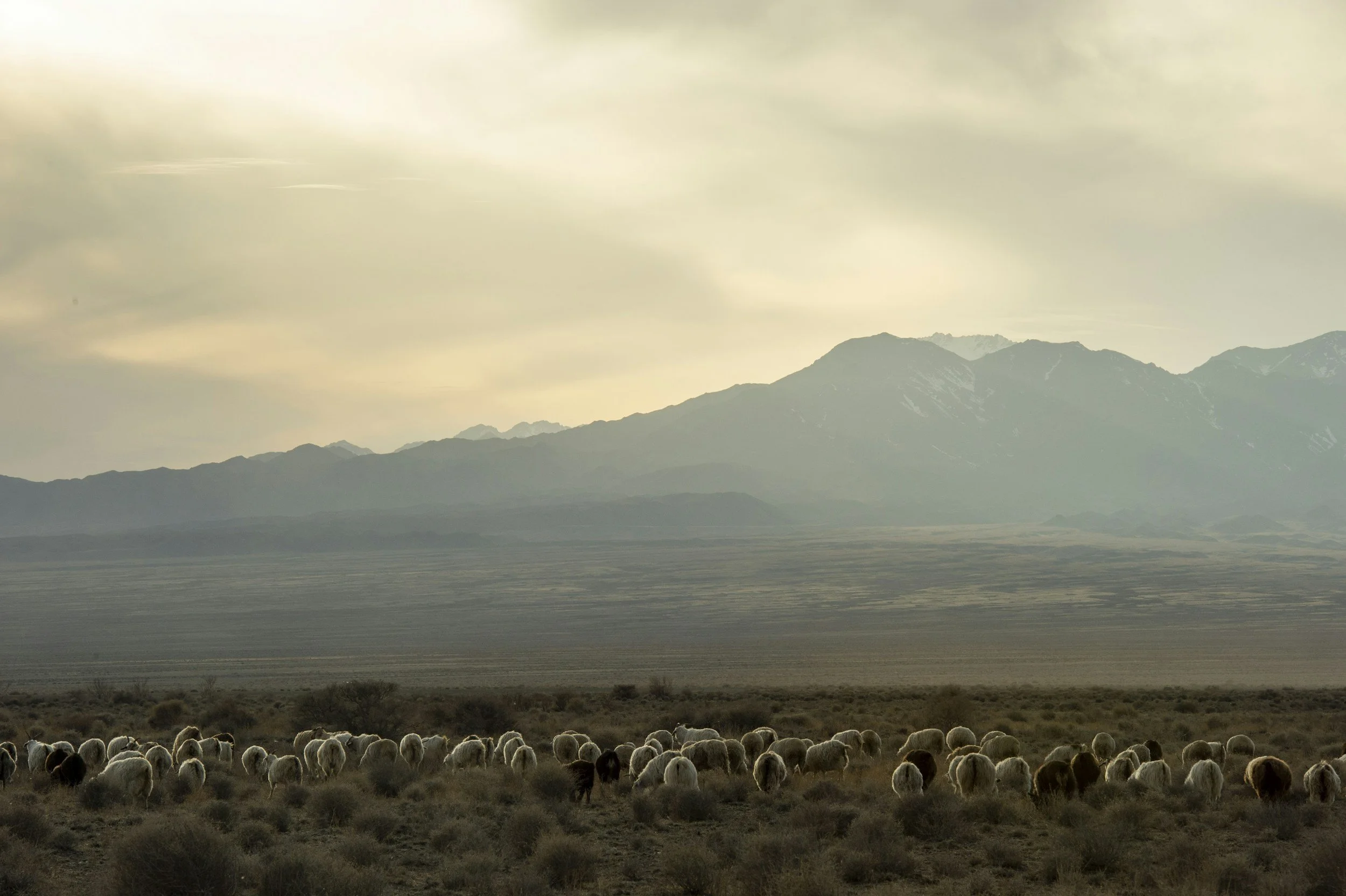
The word “sheep,” no doubt, points to something in the character and ways of true Christians. It would be easy to show that weakness, helplessness, and harmlessness, usefulness, are all points of resemblance between the sheep and the believer. But the leading idea in our Lord’s mind was the entire dependence of the sheep upon its Shepherd. Just as sheep hear the voice of their own shepherd, and follow him, so do believers follow Christ. By faith they listen to His call. By faith they submit themselves to His guidance. By faith they lean on Him, and commit their souls implicitly to His direction. The ways of a shepherd and his sheep are a most useful illustration of the relation between Christ and the true Christian.

Luke 13:18-21
But the progress of the Gospel, after the seed was once cast into the earth, was great, steady and continuous. The grain of mustard seed “grew and waxed a great tree.” In spite of persecution, opposition, and violence, Christianity gradually spread and increased. Year after year its adherents became more numerous. Year after year idolatry withered away before it. City after city, and country after country, received the new faith. Church after church was formed in almost every quarter of the earth then known. Preacher after preacher rose up, and missionary after missionary came forward to fill the place of those who died. Roman emperors and heathen philosophers, sometimes by force and sometimes by argument, tried in vain to check the progress of Christianity. They might as well have tried to stop the tide from flowing, or the sun from rising.

Psalm 105:16
“Moreover he called for a famine upon the land.” He had only to call for it as a man calls for his servant, and it came at once. How grateful ought we to be that he does not often call in that terrible servant of his, so meagre and gaunt, and grim, so pitiless to the women and the children, so bitter to the strong men, who utterly fail before it.

1 Samuel 9:10-13
As a common meal, and so this is an instance of the great duty of craving a blessing upon our meat before we partake of it. We cannot expect benefit from our food without that blessing, and we have no reason to expect that blessing if we do not pray for it. Thus we must give glory to God as our benefactor, and own our dependence upon him and our obligations to him.

Genesis 3:19
Therefore, the labour common to the whole body is here described; not that which belongs peculiarly to each member, except so far as it pleases the Lord to divide to each a certain measure from the common mass of evils. It is, however, to be observed, that they who meekly submit to their sufferings, present to God an acceptable obedience, if, indeed, there be joined with this bearing of the cross, that knowledge of sin which may teach them to be humble.

Psalm 143:6
“I stretch forth my hands unto thee.” He was eager for his God. His thoughts of God kindled in him burning desires, and these led to energetic expressions of his inward longings. As a prisoner whose feet are bound extends his hands in supplication when there is hope of liberty, so does David. “My soul thirsteth after thee, as a thirsty land.” As the soil cracks, and yawns, and thus opens its mouth in dumb pleadings, so did the Psalmist's soul break with longings. No heavenly shower had refreshed him from the sanctuary: banished from the means of grace, his soul felt parched and dry, and he cried out, “My soul to thee;” nothing would content him but the presence of his God. Not alone did he extend his hands, but his heart was stretched out towards the Lord. He was athirst for the Lord. If he could but feel the presence of his God he would no longer be overwhelmed or dwell in darkness; nay, everything would turn to peace and joy.
Genesis 4:2
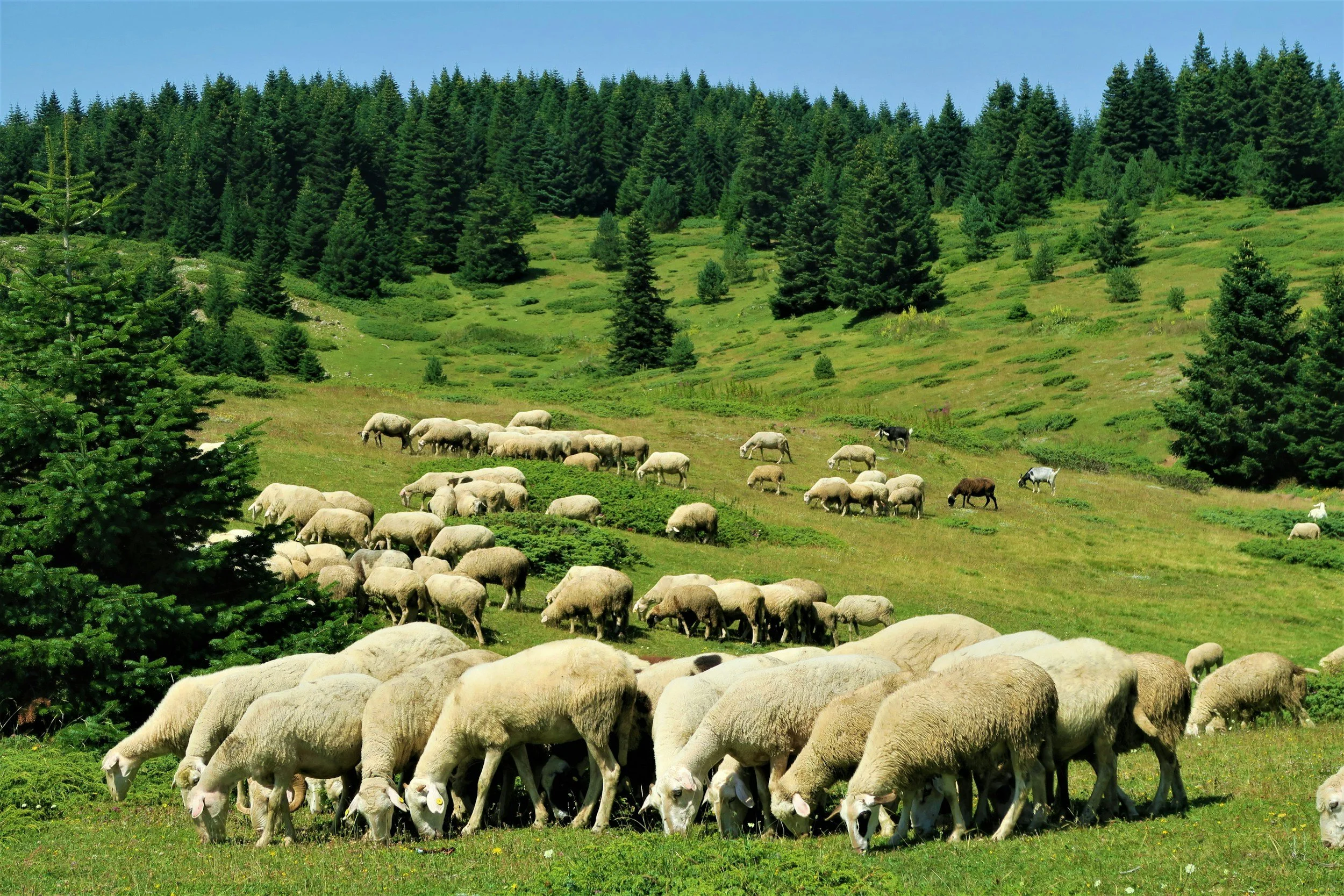
“And Abel was a keeper of sheep.” Whether both the brothers had married wives, and each had a separate home, Moses does not relate. This, therefore, remains to us an uncertainty, although it is probable that Cain was married before he slew his brother; since Moses soon after adds, that he knew his wife, and begat children: and no mention is there made of his marriage. Both followed a kind of life in itself holy and laudable. For the cultivation of the earth was commanded by God; and the labour of feeding sheep was not less honourable than useful; in short, the whole of rustic life was innocent and simple, and most of all accommodated to the true order of nature. This, therefore, is to be maintained in the first place, that both exercised themselves in labour approved by God, and necessary to the common use of human life.