
John 15:12-16
Election is always to sanctification. Those whom Christ chooses out of mankind, He chooses not only that they may be saved, but that they may bear fruit, and fruit that can be seen. All other election beside this is a mere vain delusion, and a miserable invention of man. It was the faith and hope and love of the Thessalonians, which made St. Paul say, “I know your election of God.” (1 Thess. 1:4) Where there is no visible fruit of sanctification, we may be sure there is no election.

John 21:1-14
We should observe, for one thing, in these verses, the poverty of the first disciples of Christ. We find them working with their own hands, in order to supply their temporal wants, and working at one of the humblest of callings, — the calling of a fisherman. Silver and gold they had none, lands and revenues they had none, and therefore they were not ashamed to return to the business to which they had, most of them, been trained. Striking is the fact, that some of the seven here named were fishing, when our Lord first called them to be Apostles, and again fishing, when He appeared to them almost the last time. We need not doubt that to the minds of Peter, James, and John, the coincidence would come home with peculiar power.

John 15:1-6
We are meant to learn first, from these verses, that the union between Christ and believers is very close. He is “the Vine,” and they are “the branches.” The union between the branch of a vine and the main stem, is the closest that can be conceived. It is the whole secret of the branch’s life, strength, vigor, beauty, and fertility. Separate from the parent stem, it has no life of its own. The sap and juice that flow from the stem are the origin and maintaining power of all its leaves, buds, blossoms, and fruit. Cut off from the stem, it must soon wither and die.

John 12:20-26
We learn, for one thing, from our Lord’s words in this passage, that death is the way to spiritual life and glory. Except a corn of wheat fall into the ground, it abideth alone; but if it die, it bringeth forth much fruit.” This deep and mighty sentence was followed by a practical application, which closely concerns ourselves. “He that hateth his life shall keep it.” He that would be saved must be ready to give up life itself, if necessary, in order to obtain salvation. He must bury his love of the world, with its riches, honours, pleasures, and rewards, with a full belief that in so doing he will reap a better harvest, both here and hereafter. He who loves the life that now is so much that he cannot deny himself anything for the sake of his soul, will find at length that he has lost everything. He, on the contrary, who is ready to cast away everything most dear to him in this life, if it stands in the way of his soul, and to crucify the flesh with its affections and lusts, will find at length that he is no loser. In a word, his losses will prove nothing in comparison to his gains.

John 10:10-18
Like a Good Shepherd, Christ lays down His life for the sheep. He did it once for all, when He was crucified for them. He did it once for all, when He was crucified for them. When He saw that nothing could deliver them from hell and the devil, but His blood, He willingly made His soul an offering for their sins. The merit of that death He is now presenting before the Father’s throne. The sheep are saved for evermore, because the Good Shepherd died for them. This is indeed a love that passeth knowledge! “Greater love hath no man than this, that a man lay down his life for his friends.” (John 15:13)

John 21:15-17
Three times we find Him saying, “Feed” my flock: once, “Feed my lambs;” and twice my “sheep.” Can we doubt for a moment that this thrice-repeated charge was full of deep meaning? It was meant to commission Peter once more to do the work of an Apostle, notwithstanding his recent fall. But this was only a small part of the meaning. It was meant to teach Peter and the whole Church the mighty lesson, that usefulness to others is the grand test of love, and working for Christ the great proof of really loving Christ. It is not loud talk and high profession; it is not even impetuous, spasmodic zeal, and readiness to draw the sword and fight, — it is steady, patient, laborious effort to do good to Christ’s sheep scattered throughout this sinful world, which is the best evidence of being a true-hearted disciple. This is the real secret of Christian greatness. It is written in another place, “Whosoever will be great among you, let him be your minister; and whosoever will be chief among you, let him be your servant: even as the Son of man came not to be ministered unto, but to minister.” (Matt. 20:26-28)

John 1:29
He does this by taking it upon himself. He is the Lamb of God, that bears the sin of the world; so the margin reads it. He bore sin for us, and so bears it from us; he bore the sin of many, as the scape-goat had the sins of Israel put upon its head, Lev. 16:21. God could have taken away the sin by taking away the sinner, as he took away the sin of the old world; but he has found out a way of abolishing the sin, and yet sparing the sinner, by making his Son sin for us.

John 4:31-42
We have, for another thing, in these verses, strong encouragement held out to those who labour to do good to souls. We read, that our Lord described the world as a field white for the harvest;” and then said to His disciples, “He that reapeth, receiveth wages, and gathereth fruit unto life eternal.”

John 1:29-34
This name did not merely mean, as some have supposed, that Christ was meek and gentle as a lamb. This would be truth no doubt, but only a very small portion of the truth. There are greater things here than this! It meant that Christ was the great sacrifice for sin, who was come to make atonement for transgression by His own death upon the cross. He was the true Lamb which Abraham told Isaac at Moriah God would provide. (Gen. 22:8) He was the true Lamb to which every morning and evening sacrifice in the temple had daily pointed. He was the Lamb of which Isaiah had prophesied, that He would be “brought to the slaughter.” (Is. 53:7) He was the true Lamb of which the passover lamb in Egypt had been a vivid type. In short, He was the great propitiation for sin which God had covenanted from all eternity to send into the world. He was God’s Lamb.

John 10:1-9
The true sense of the “door” must be sought in our Lord’s own interpretation. It is Christ Himself who is “the door.” The true shepherd of souls is he who enters the ministry with a single eye to Christ, desiring to glorify Christ, doing all in the strength of Christ, preaching Christ’s doctrine, walking in Christ’s steps, and labouring to bring men and women to Christ. The false shepherd of souls is he who enters the ministerial office with little or no thought about Christ, from worldly and self-exalting motives, but from no desire to exalt Jesus, and the great salvation that is in Him. Christ, in one word, is the grand touchstone of the minister of religion.
John 10:19-39
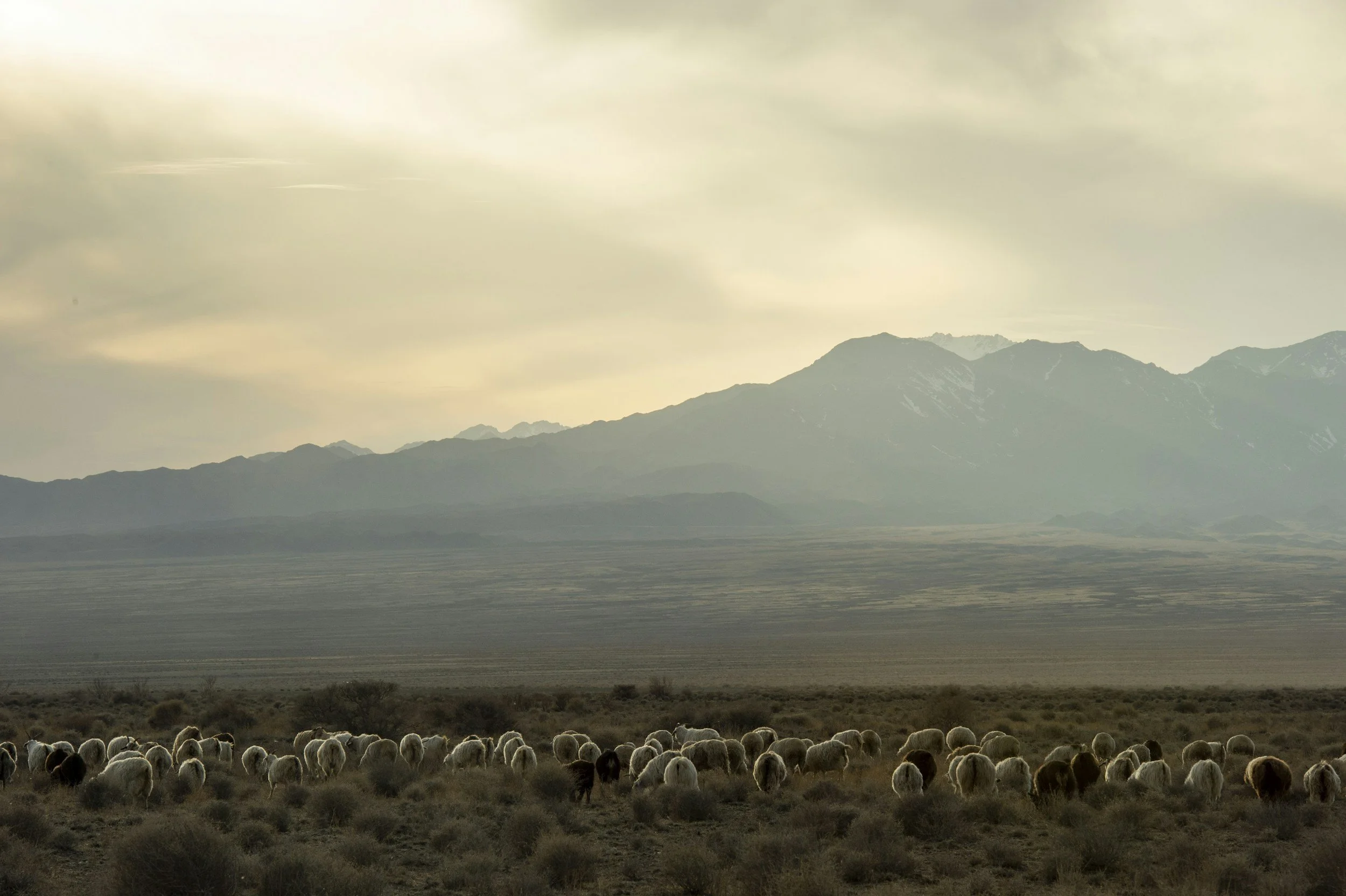
The word “sheep,” no doubt, points to something in the character and ways of true Christians. It would be easy to show that weakness, helplessness, and harmlessness, usefulness, are all points of resemblance between the sheep and the believer. But the leading idea in our Lord’s mind was the entire dependence of the sheep upon its Shepherd. Just as sheep hear the voice of their own shepherd, and follow him, so do believers follow Christ. By faith they listen to His call. By faith they submit themselves to His guidance. By faith they lean on Him, and commit their souls implicitly to His direction. The ways of a shepherd and his sheep are a most useful illustration of the relation between Christ and the true Christian.